
Replacing Myths with Data: What Cannabis Growers Can Finally Learn About Airflow
For years, airflow has been among the most debated yet least measured variables in indoor cannabis cultivation.
Ask ten growers how much airflow they run, and you’ll get ten different answers. Most are based on instinct, tradition, or the classic test: “Are the leaves dancing?”
Until now, there hasn’t been real cannabis-specific data to validate those decisions.
That’s exactly why Pipp Horticulture partnered with Dr. Allison Justice and the Cannabis Research Center & Coalition (CRC): to replace assumptions with data, and provide the industry with real benchmarks for airflow.
Why This Research Exists
This project represents the first controlled, replicated airflow trial of its kind in the cannabis industry.
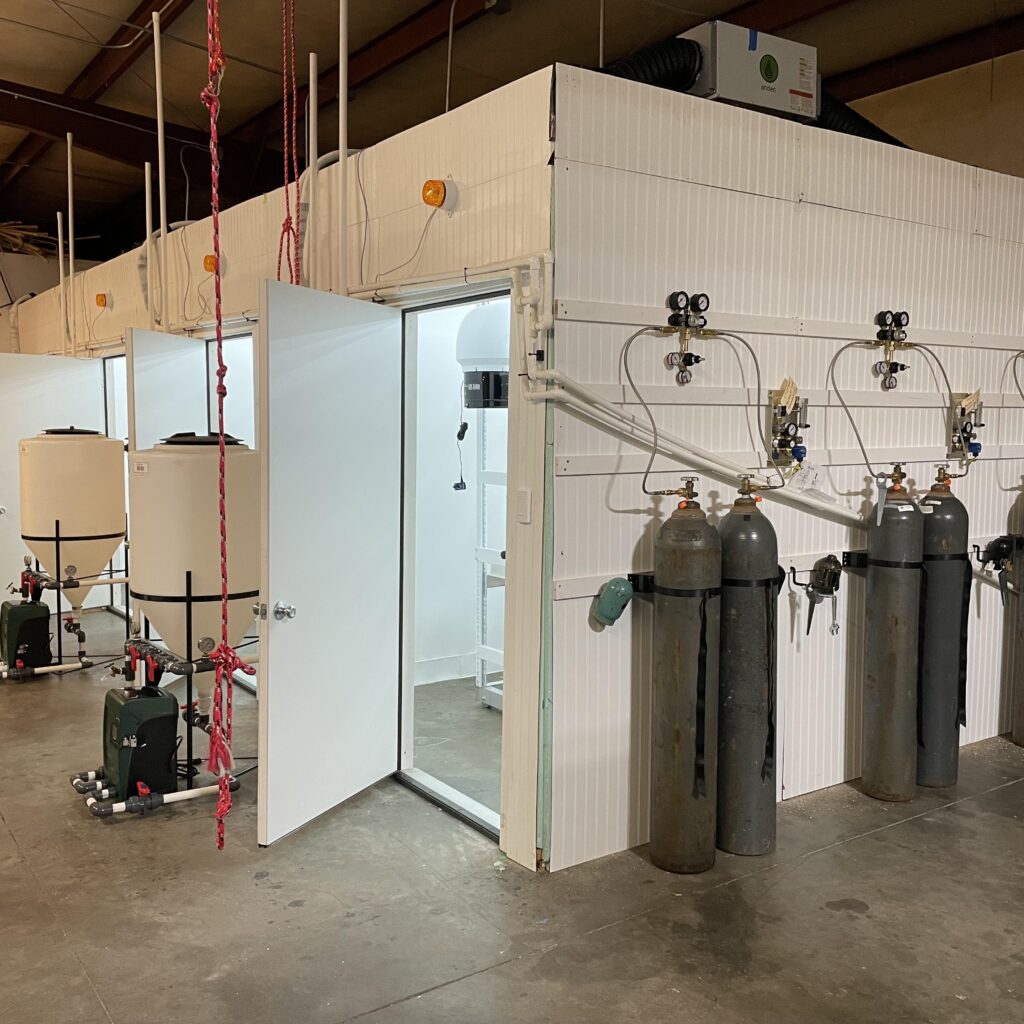
Together, Pipp and the CRC built a dedicated research facility with:
- Three identical flower rooms
- Tight environmental control (VPD, temperature, humidity held constant)
- Repeated trials over multiple years
The goal was simple but ambitious:
- Quantify how airflow velocity impacts plant growth, yield, and quality
- Identify thresholds where airflow starts to matter
- Reduce variability and risk in commercial facilities
- Share the data openly so the entire industry can benefit
This research isn’t proprietary. It’s public because better data leads to better facilities, better systems, and better outcomes for everyone.
Trial One: Testing the “Industry Standard”
The first airflow trial focused on what most growers consider normal operating ranges:
- Near-zero airflow (environment homogenized, but no targeted velocity)
- Low airflow (100 FPM)
- Medium airflow (200 FPM)
What Happened?
Not much, at least statistically.
Across these modest airflow treatments, researchers found:
- No significant differences in yield
- No meaningful differences in plant height
- No major visual differences in flower quality
Visually, chemically, and quantitatively, the plants looked remarkably similar.
This raised an important question:
Are growers already operating below the threshold where airflow actually drives change?
While rescheduling is often framed as a political victory, the reality is far more technical.
Two things undermined the government’s ability to defend cannabis as a Schedule I substance:
- FDA-compliant clinical research finally produced human data showing cannabis has legitimate medical value.
- Pharmaceutical-grade cultivation and manufacturing, both domestically and internationally, demonstrated that cannabis can be produced consistently, safely, and reliably under rigorous standards.
Once those two pillars were in place, the Schedule I argument, that cannabis had “no accepted medical use”, became increasingly indefensible. Rescheduling wasn’t a celebration; it was a regulatory concession to evidence.
Importantly, moving cannabis to Schedule III also lowers barriers to future research, allowing more data, more trials, and more medical clarity to emerge.
Trial Two: Pushing Past the Threshold
To answer that question, Trial Two intentionally pushed airflow higher:
- 0 FPM
- ~200 FPM
- 400 FPM
This is where the data started to separate, and where assumptions broke down.
*The data here includes one replicate. The second replicate is underway to strengthen statistics
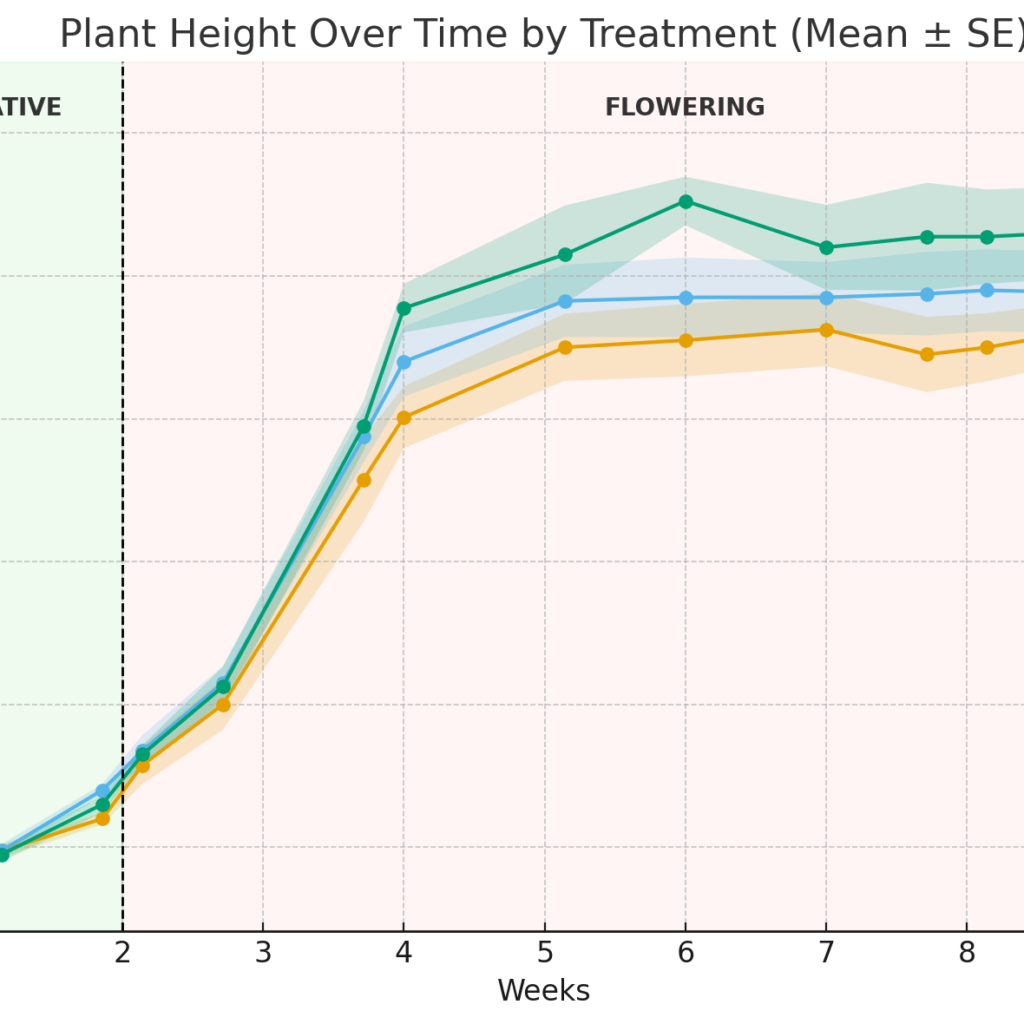
Airflow and Plant Height: A Surprising Result
Conventional wisdom suggests that higher airflow should mechanically stress plants and keep them shorter.
The data showed the opposite.
Plants grown at higher airflow velocities were:
- Taller
- Faster growing
- More vigorous early in flower
By the end of the stretch, plants in the highest airflow treatment were roughly 6 inches taller than those with no targeted airflow.
Just as importantly, the data confirmed what many growers observe anecdotally:
- ~90% of vertical growth in the flower is complete by the end of week three
Airflow didn’t change when plants stretched; it changed how effectively they grew during that critical window.
Plant Physiology Tells the Real Story
Visual assessments revealed clear physiological differences between treatments:
Low-airflow plants showed:
- Redder stems
- Higher anthocyanin expression
- Signs that could easily be mistaken for nutrient deficiencies
Higher-airflow plants appeared:
- More balanced
- More uniform
- Less stressed overall
These weren’t subtle differences in isolation; they reflected fundamentally different plant responses to the environment.
The 200 FPM Threshold
One of the most important findings from the study was this:
Below ~200 feet per minute, airflow had limited measurable impact.
Above ~200 feet per minute, differences became clear and consistent.
This helps explain why airflow is so often misunderstood:
- Many facilities think they’re hitting 100–200 FPM
- In reality, airflow is uneven, inconsistent, and highly positional
To see real, repeatable results, airflow has to be:
- Measurable
- Consistent
- Delivered across the entire canopy
Yield, Biomass, and Where the Plant Puts Its Energy
When positional bias was removed from the data (more on that below), yield trends became clear:
Compared to no airflow:
- Medium and high airflow treatments produced significantly higher fresh and dry flower weight
- Yield increased as airflow increased, up to the tested limit
But yield wasn’t the most interesting part.
Stem-to-Flower Efficiency
The medium airflow treatment showed:
- Lower stem biomass
- A more efficient allocation of energy toward flowers
In other words:
More of the plant’s energy went into what growers actually sell.
This opens the door to future questions:
- Is there an airflow “sweet spot” that maximizes flower over structure?
- Do different cultivars respond differently at higher velocities?
That’s exactly why the trials are being repeated.
Position Matters: Why Uniform Airflow Is Critical
Even in a perfectly engineered room, researchers observed positional bias:
- Plants closest to airflow sources experienced different velocities
- The first 1–2 feet of each row behaved differently than the rest
To isolate true treatment effects, the research team had to exclude the first two rows of plants from certain analyses.
For commercial growers, the takeaway is blunt:
If airflow isn’t uniform, neither is your crop.
Random fans blasting a single section of a canopy don’t improve airflow; they create variability.
Trim Percentage: A Hidden Labor Win
One of the most unexpected and commercially relevant findings was the trim percentage.
Plants grown with:
- No airflow averaged ~42% trim
- Higher airflow produced significantly lower trim percentages
Lower trim means:
- Less labor
- Faster processing
- Higher sellable yield
Airflow didn’t just change how plants grew; it changed how efficiently they could be processed after harvest.
What This Means for Growers
This research doesn’t suggest that “more airflow is always better.”
What it does show is:
- Airflow matters far more than previously quantified
- There is a measurable threshold where it starts driving outcomes
- Consistency is as important as velocity
- Poor airflow design creates variability, not resilience
Most importantly, it proves that cannabis airflow can, and should, be engineered using data, not folklore.
Get a FREE Grow Consultation
Lorem ipsum dolor sit amet, consectetur adipiscing elit. Ut elit tellus, luctus nec ullamcorper mattis, pulvinar dapibus leo.