
The 7 Most Expensive Mistakes in Cannabis Facility Design (and How to Avoid Them)
An Engineering and Operations Perspective
Commercial cannabis cultivation facilities are among the most mechanically complex controlled environments in modern agriculture. With lighting densities regularly exceeding 40W/ft², high transpiration-driven latent loads, and biological processes that punish even modest environmental deviation, the margin for design error is thin.
The consequences of poor facility design are not abstract. They show up as pathogen pressure, yield variance, compliance risk, project delays, and major capital replacement costs that often arrive long after budgets have been exhausted.
What follows is a technical breakdown of the seven most common and expensive design failures we see across the industry, and what it takes to avoid them.
1. Undersized HVAC & Dehumidification Systems
One of the most common and expensive mistakes is underestimating HVAC capacity, especially when it comes to moisture removal. On paper, systems often look sufficient. In reality, they’re designed around static assumptions, while plant environments are anything but static.
Where things go wrong:
- Transpiration increases dramatically from early to late flower
- Canopy density changes airflow dynamics
- Irrigation strategies evolve throughout the cycle
- Peak demand isn’t properly accounted for
Most systems are designed for average conditions, but failures happen during peak load, typically mid-to-late flower when humidity spikes.
Why it matters:
When HVAC is undersized, teams are forced into reactive mode—adjusting irrigation, temperature, and plant density just to stay in range. That leads to:
- Reduced yields
- Slower growth
- Inconsistent plant performance
A smarter approach:
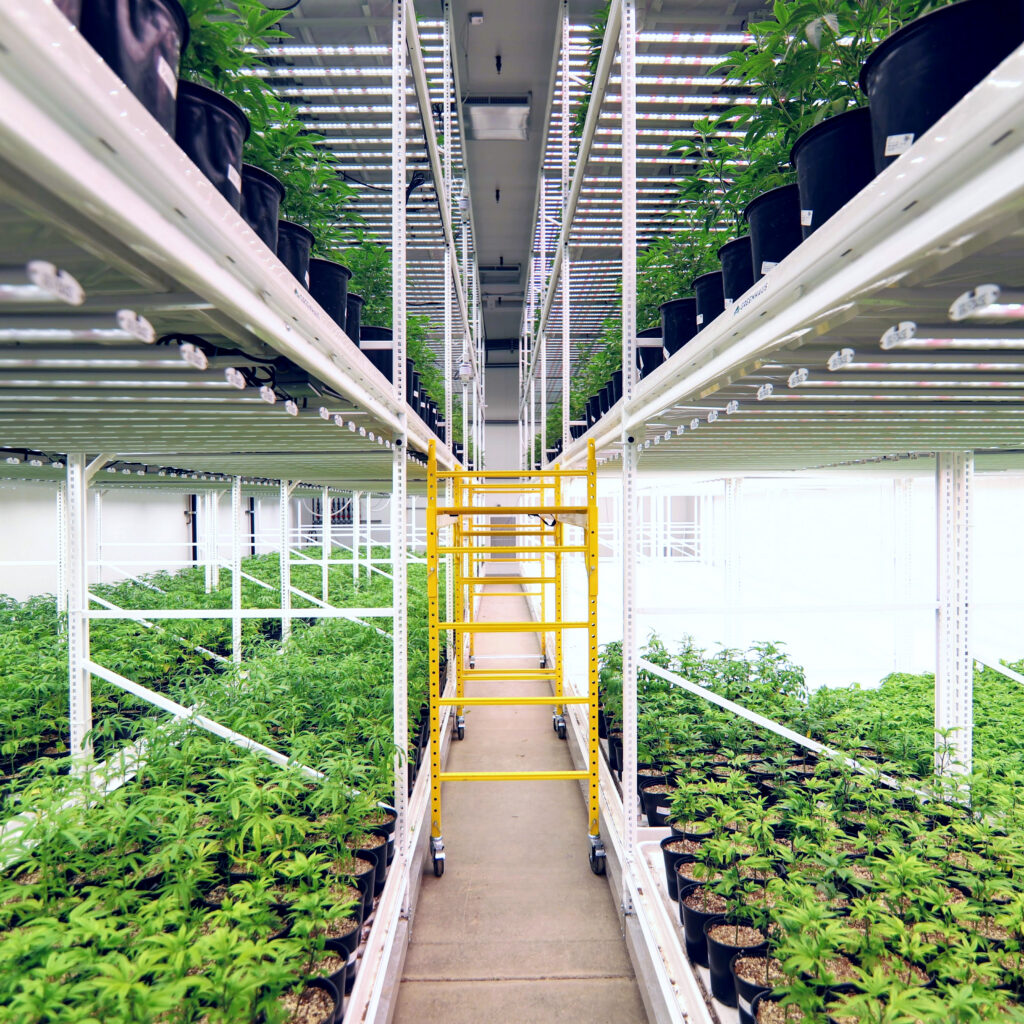
Design for peak biological demand, not averages, and ensure the airflow strategy aligns with system capacity. Pipp’s mobile vertical grow systems maximize canopy efficiency per square foot, allowing the HVAC investment to work harder and produce more return from every ton of cooling and dehumidification capacity installed.
2. Poor Airflow Strategy
Airflow underperformance is typically a design and distribution problem, not an inherent limitation of the cultivation configuration.
Well-designed multi-tier facilities can achieve excellent environmental uniformity when airflow is intentionally engineered into the system from the beginning.
Common issues:
- Microclimates within dense canopies
- Uneven temperature and humidity zones
- Inconsistent VPD across tiers
Without proper airflow, you may see:
- Hot spots
- Humidity pockets
- Uneven growth and yield
Why it matters:
When airflow is engineered correctly, multi-tier cultivation can perform exceptionally well. Airflow trials conducted by PIPP Horticulture using the Vertical Air Solutions (VAS) in-rack airflow system, as part of research performed through the Cannabis Research Coalition, demonstrated that maintaining horizontal canopy-level air velocities of 300 to 400 feet per minute during flower increased yields by more than 20% compared to velocities of 100 to 200 feet per minute.
How to improve it:
- Design for airflow both above and below canopy
- Ensure proper spacing and layout between rows
- Use systems that promote even air distribution
Pipp’s vertical solutions are engineered with airflow in mind, helping eliminate dead zones and maintain consistency across every tier.
3. Assuming “There’s Plenty of Power”
Few things derail a project faster than discovering power limitations too late.
“We have plenty of power” is one of the most common and risky assumptions in facility planning.
What’s often overlooked:
- Total connected vs. actual demand load
- Startup and peak load requirements
- Future expansion needs
- Utility upgrade timelines
Real consequences:
- Costly redesigns
- Delays of months (or even years)
- Compromised system performance
- Inability to fully operate HVAC or lighting
Best practice:
Validate power availability before signing a lease or purchasing a building and design for future scalability, not just day-one needs.
Multi-tier cultivation is especially valuable in power-constrained environments because it generates more canopy per square foot and per kilowatt of installed infrastructure than single-tier alternatives.
4. Underestimating Everyday Electrical Needs
Beyond major systems, smaller electrical details can create daily operational headaches.
Frequently missed:
- LED driver circuit pairing and dimming compatibility
- Convenience outlets at working height for fans, IPM equipment, shop vacs, sensors, and hand tools
- Accessible panel locations for troubleshooting and maintenance
- Emergency circuit segregation for environmental monitoring, irrigation controllers, and life-safety systems
- Accurate breaker labeling
These “small” oversights can lead to:
- Tripped breakers
- Workflow inefficiencies
- Delayed room turns
The fix:
Plan for how your team will actually operate, not just how the system looks on paper.
5. Designing for Today Instead of Tomorrow
The most common version of this mistake is simple: “We will add capacity when we need it.”
Adding capacity to an operating facility is expensive, disruptive, and often requires interrupting active production. It is rarely cheaper than designing for scalability from the beginning.
As operations scale, so do demands on:
- Power
- HVAC
- Workflow efficiency
- Space utilization
The result:
Facilities quickly hit bottlenecks that limit expansion and profitability.
A better strategy:
Design with flexibility built in, from infrastructure to layout.
The cost difference between a properly sized chiller and one with 25% headroom is modest during procurement. Replacing that system during active production, including downtime, is not.
Pipp’s mobile cultivation systems allow production capacity to scale within the existing footprint as operations mature, without major structural modification or construction disruption.
6. Poor Floor & Drainage Design
It may not be the most exciting topic, but flooring and drainage can significantly impact long-term operations.
Common mistakes:
- Uneven floors in multi-tier systems
- Improper drainage slopes
- Low-quality coatings that degrade over time
Why it matters:
Poor drainage leads to:
- Standing water
- Sanitation challenges
- Increased maintenance
What works best:
- Flat, level floors for mobile systems
- Intentional slope toward drains
- Durable, sealed surfaces (like urethane cement)
These decisions improve cleanliness, efficiency, and long-term durability.
7. Lack of Alignment Between Design & Operations
The most systemic failure in cannabis facility design is organizational, not technical.
Facilities are often designed by architects and mechanical engineers without meaningful input from experienced cultivators and operators. Production teams are then forced to spend years working around decisions made without them.
Facilities are often designed without fully understanding how they’ll be run day-to-day.
The impact:
- Misaligned system capacity
- Inefficient workflows
- Constant operational compromises
The solution:
Bring operational expertise into the design phase early, and ensure every decision supports real-world cultivation practices.
The highest-performing facilities are not always the ones with the most expensive equipment. They are the ones where infrastructure, environmental systems, and cultivation strategy were developed together with the people who will operate the building.
Final Thoughts: Design for Performance, Not Just Completion
The most successful cultivation facilities aren’t just built, they’re thoughtfully designed around how plants grow and how teams operate.
Avoiding these common mistakes comes down to one principle:
Align your infrastructure with biological demand and operational reality.
With decades of experience and installations in thousands of grow rooms worldwide, Pipp Horticulture helps cultivators design smarter, scale efficiently, and get more out of every square foot.
Want the full breakdown? Watch the full webinar here!
Frequently Asked Questions
What is the biggest mistake in cannabis facility design?
Undersized HVAC and dehumidification systems are among the most costly mistakes, especially when peak demand isn’t properly accounted for.
How can I improve airflow in my grow room?
Focus on uniform air distribution across the canopy, eliminate dead zones, and design layouts that support consistent airflow.
Why is power planning so critical?
Insufficient or poorly planned power can delay projects, increase costs, and limit your ability to operate key systems like lighting and HVAC.
What flooring is best for cultivation facilities?
Sealed concrete systems like urethane cement offer durability, moisture resistance, and easier sanitation compared to traditional epoxy.
How can I increase yield without expanding my facility?
Optimizing vertical space with mobile grow systems allows you to increase canopy and production within your existing footprint.
Get a FREE Grow Consultation
Lorem ipsum dolor sit amet, consectetur adipiscing elit. Ut elit tellus, luctus nec ullamcorper mattis, pulvinar dapibus leo.