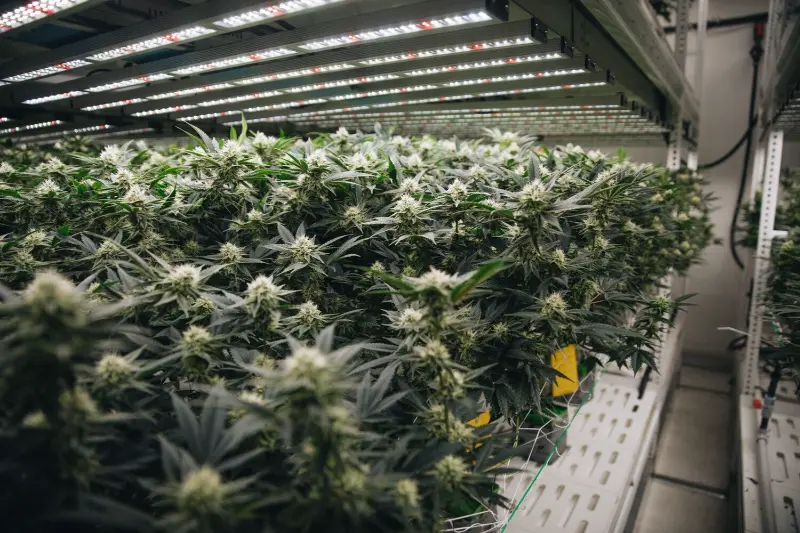
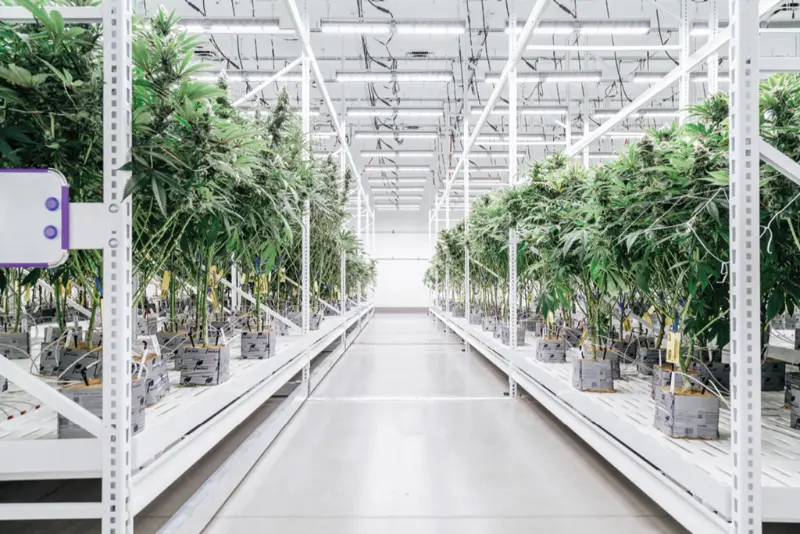
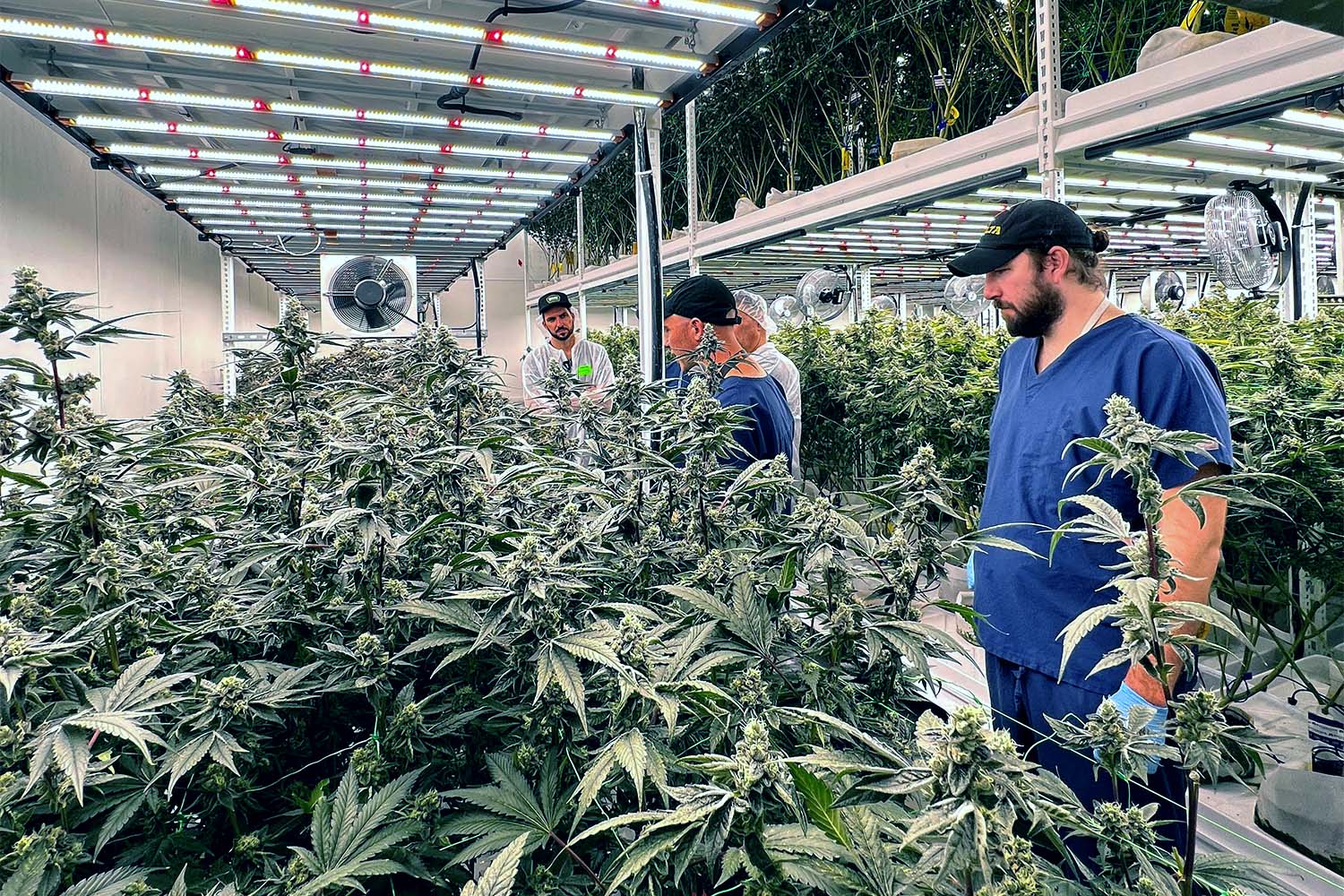
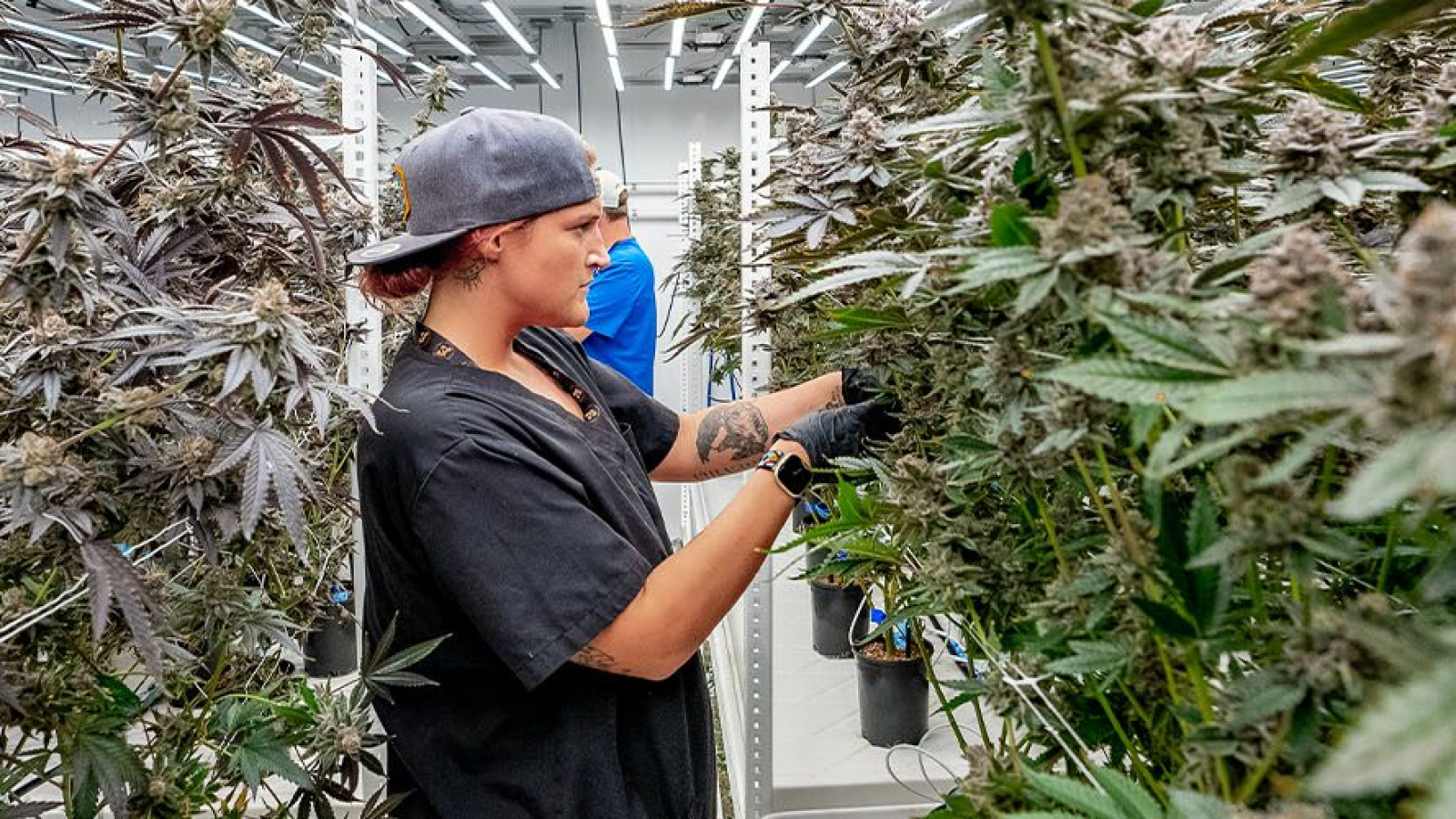
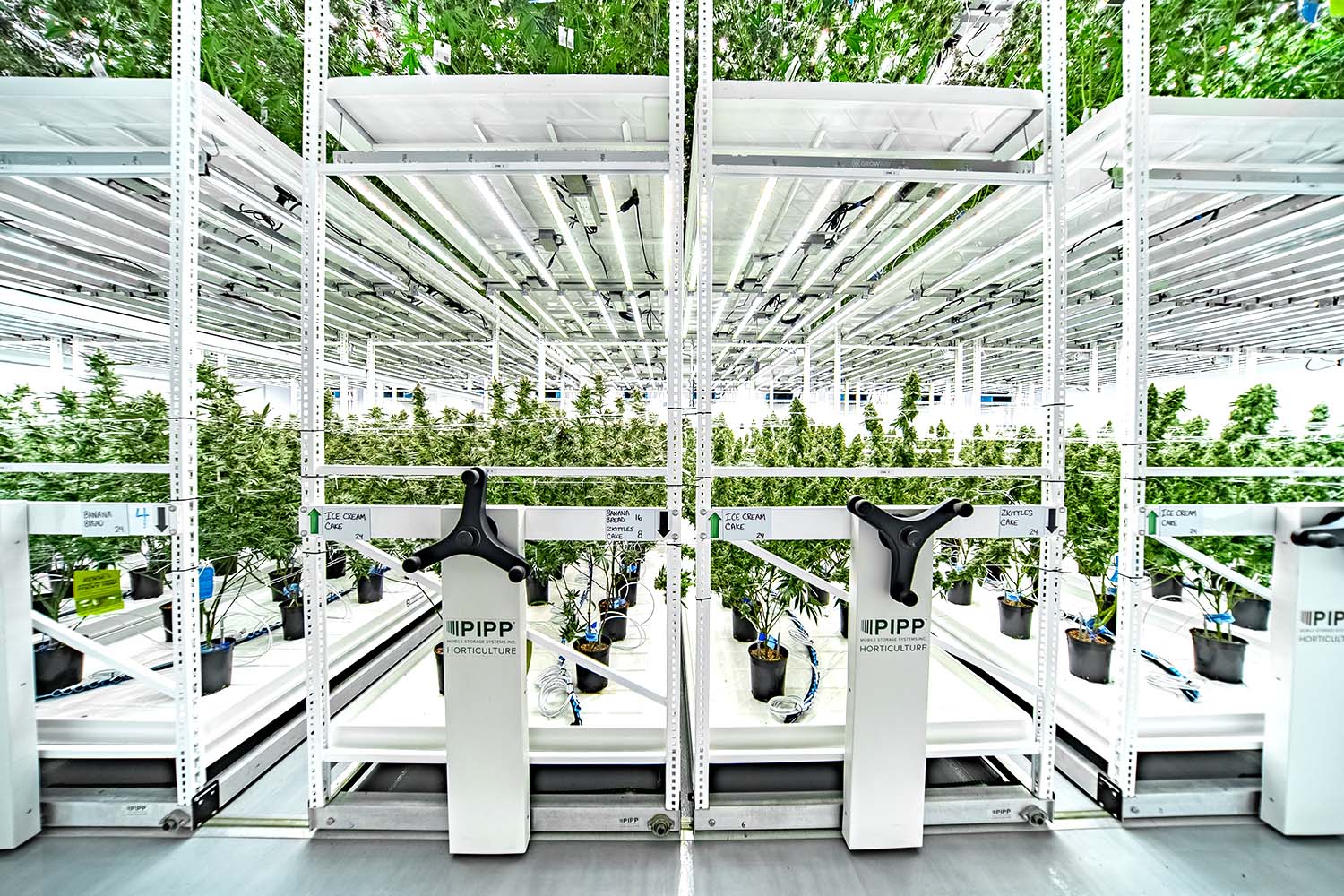
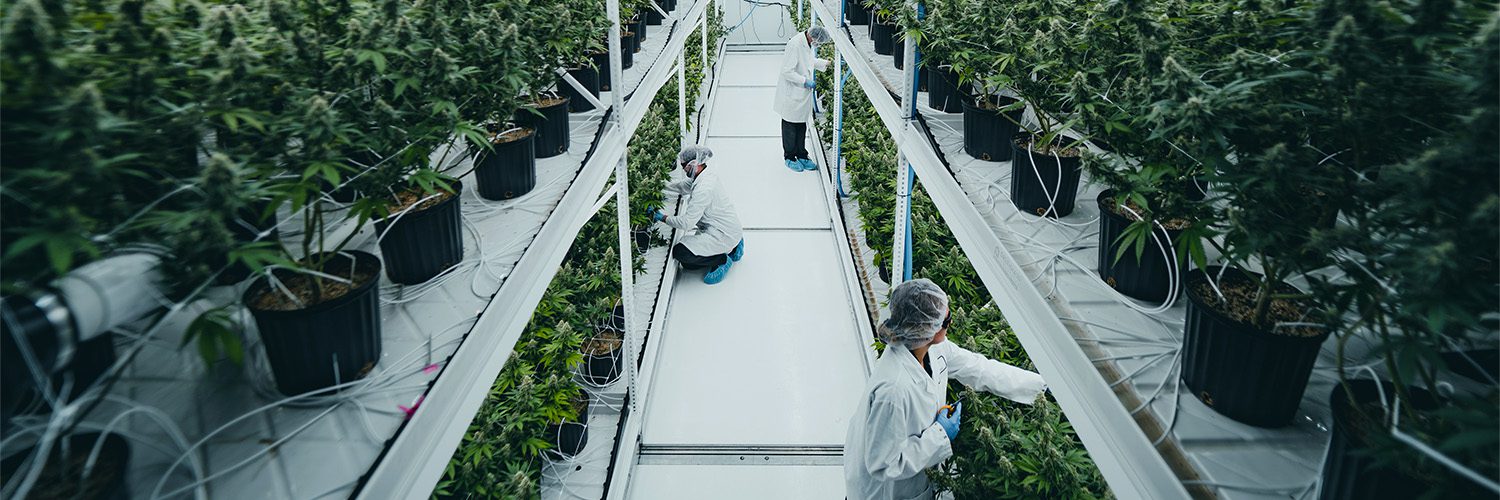
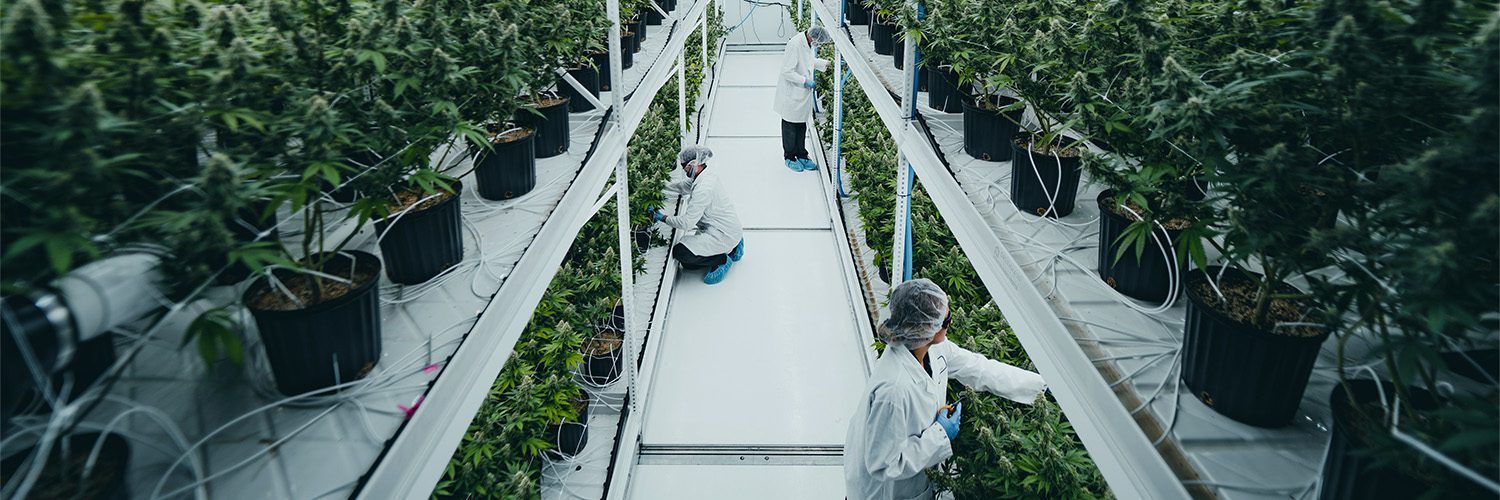
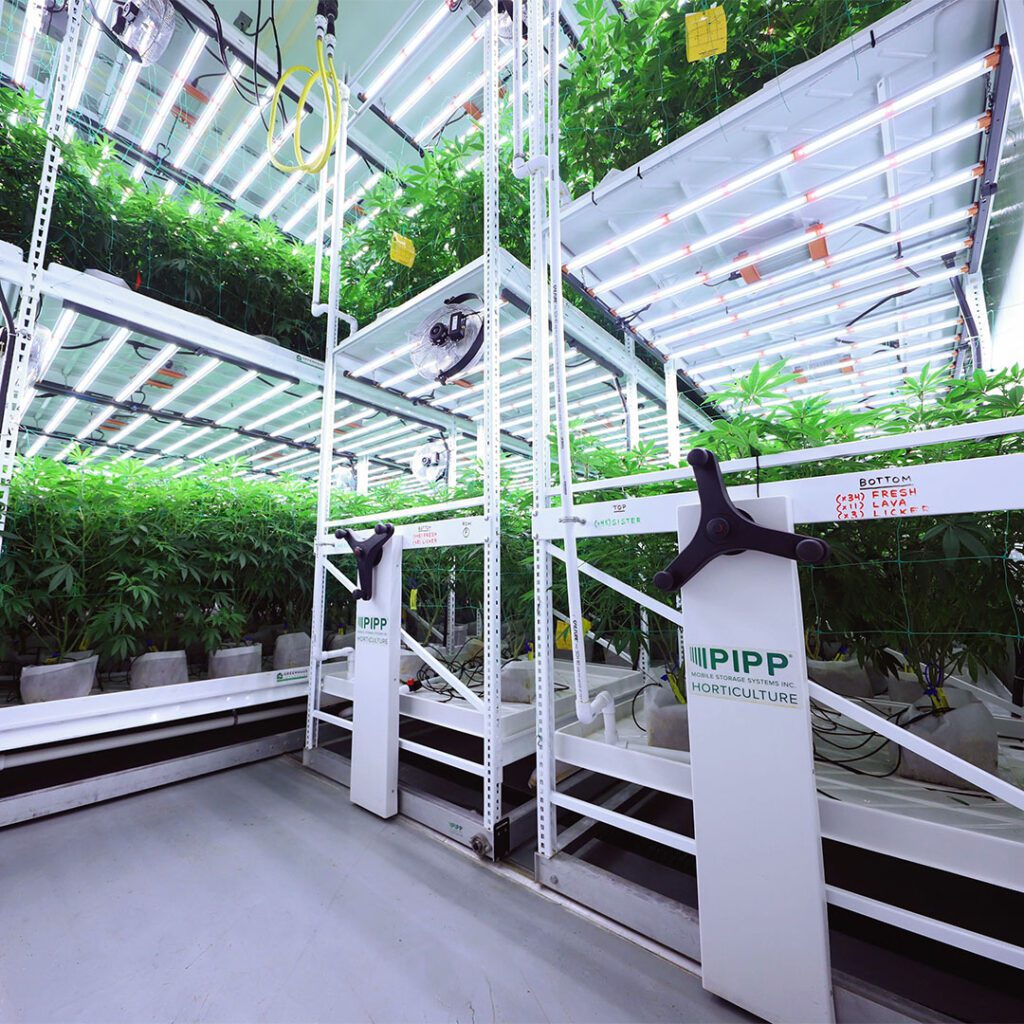
Cannabis Flower Room Using Drip-To-Drain Grow Trays

Effective Tray and Drainage Strategies for Vertical Grow Rooms

Effective Tray and Drainage Strategies for Vertical Grow Rooms

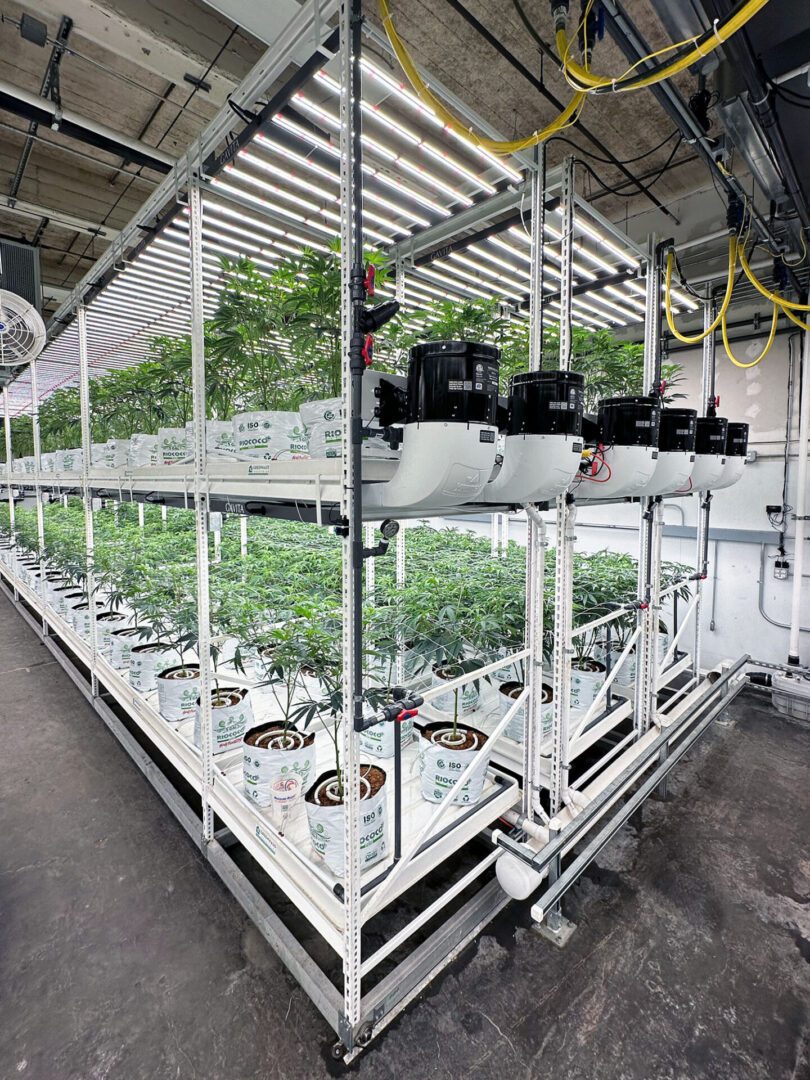
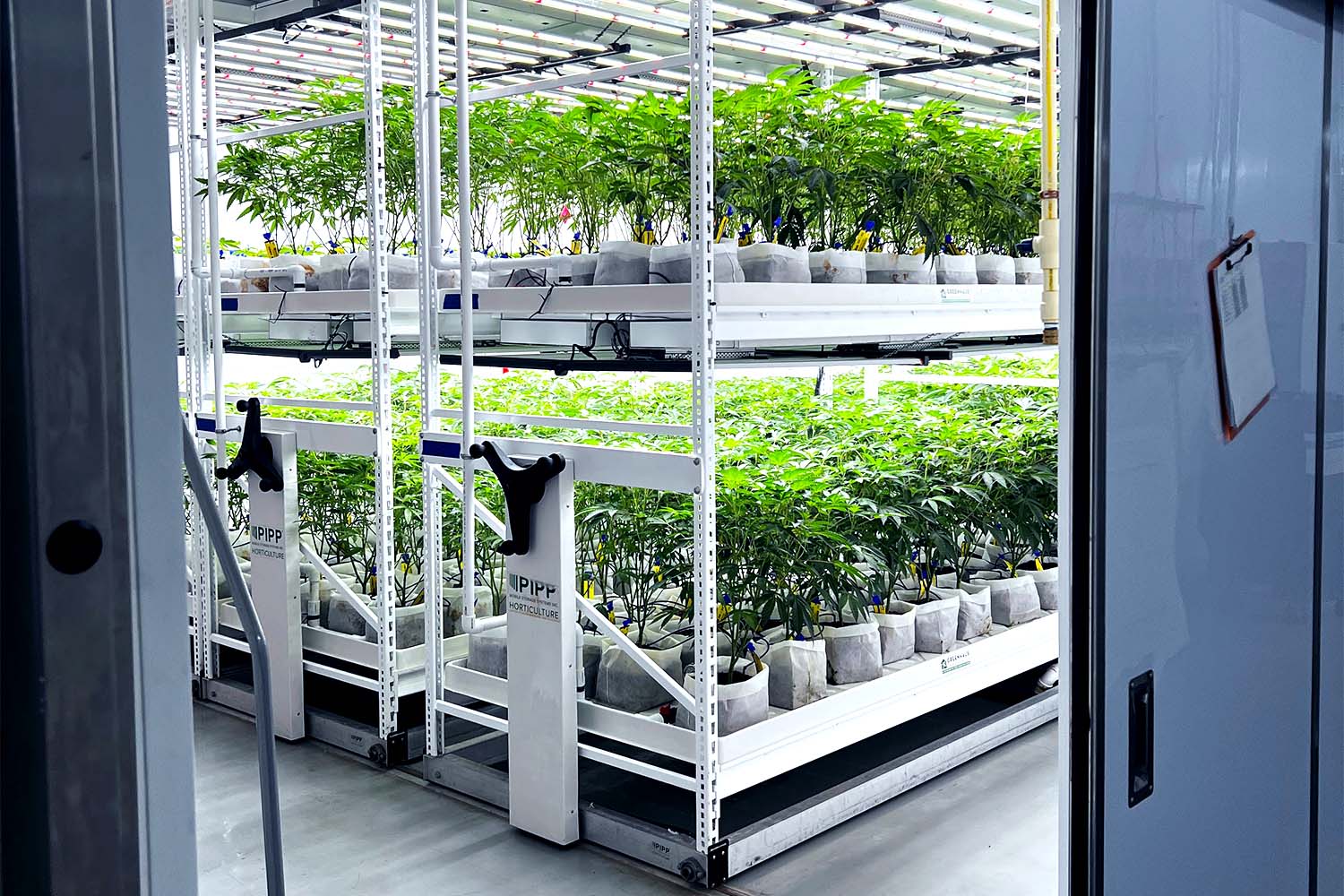
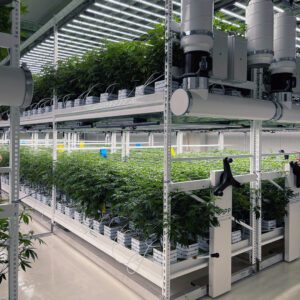
Cannabis Flower Room Using Drip-To-Drain Grow Trays

Water is fundamental to your cannabis cultivation business. It follows that proper drainage is crucial to prevent oversaturation and promote healthy plant growth. In cannabis cultivation, especially within vertical farming systems, the design and implementation of an effective drainage system can significantly impact overall productivity and plant health. 

Grow tray selection is integral to this process, as certain trays come equipped with grid systems to aid in proper drainage. Collaborating with a plumber skilled in vertical racking systems and grow rooms can make a substantial difference in determining the best approach for your facility.

Providing each plant with the right amount of water and nutrients is essential in any cannabis cultivation operation. In vertical farming, irrigation systems are typically automated, and a well-chosen drainage method will handle most runoff. However, the trays used should also play a role in preventing plant oversaturation. High-quality trays are designed to avoid issues like root rot or plant death due to excessive moisture. Trays with built-in or removable grid systems offer an effective solution for managing runoff, ensuring it reaches drains without causing damage to the plants.

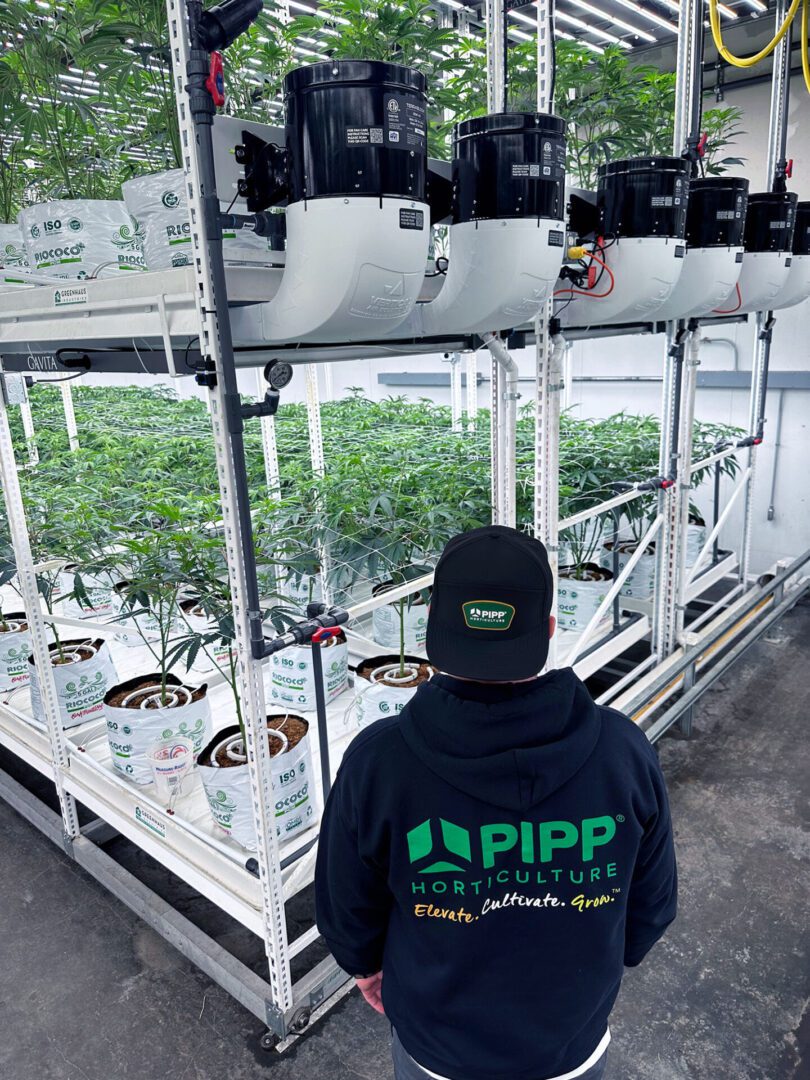
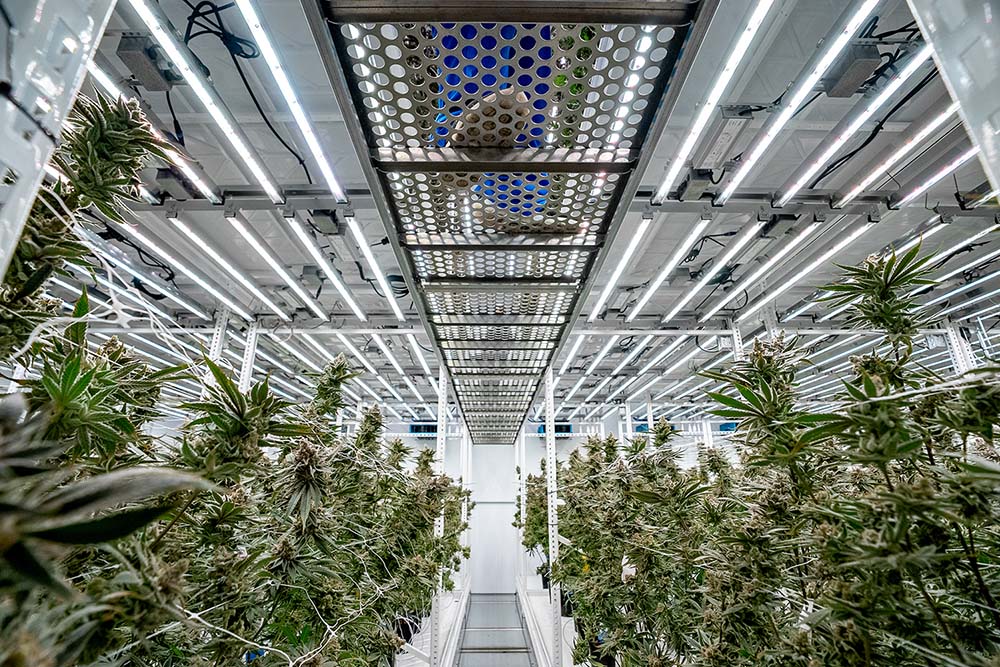
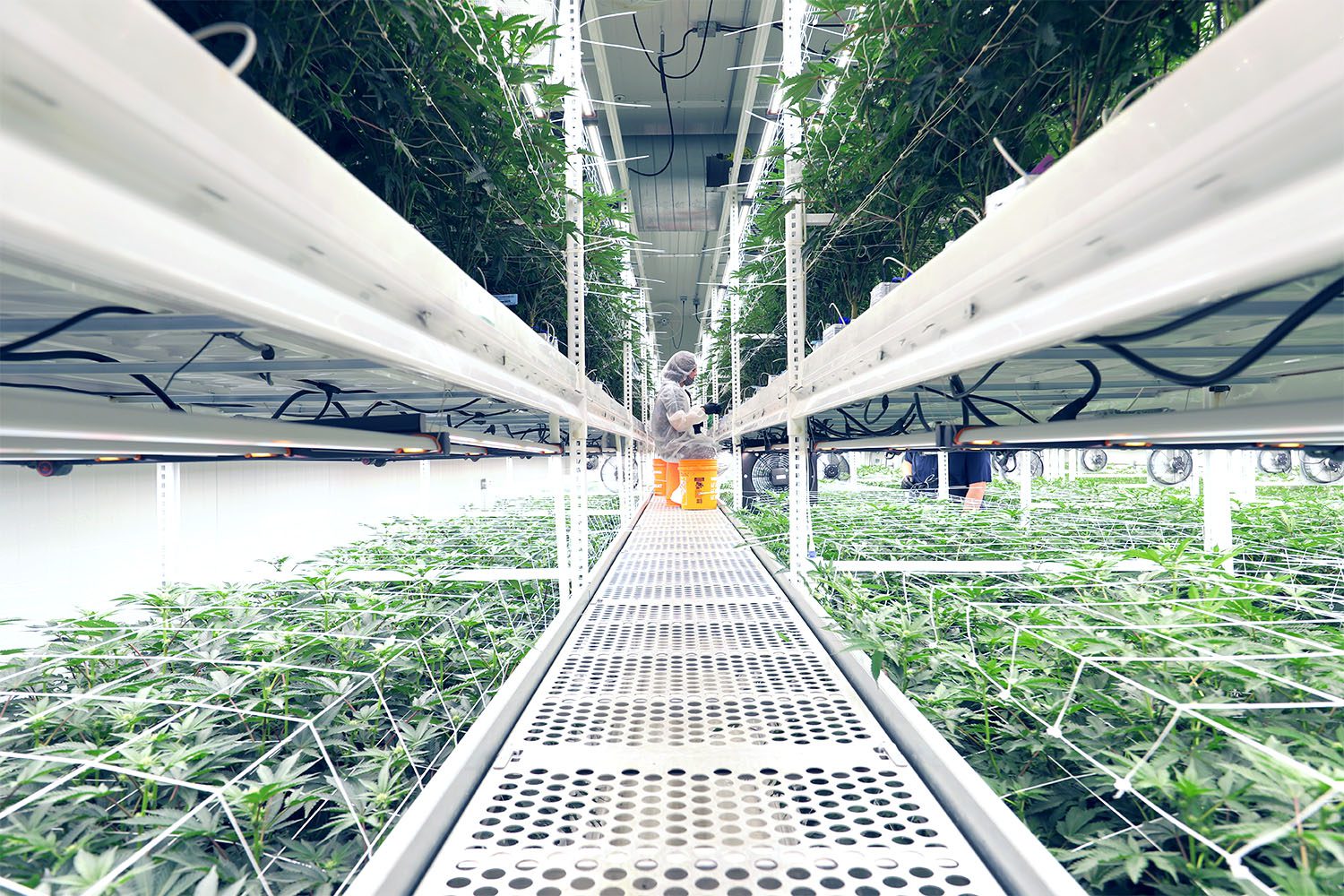
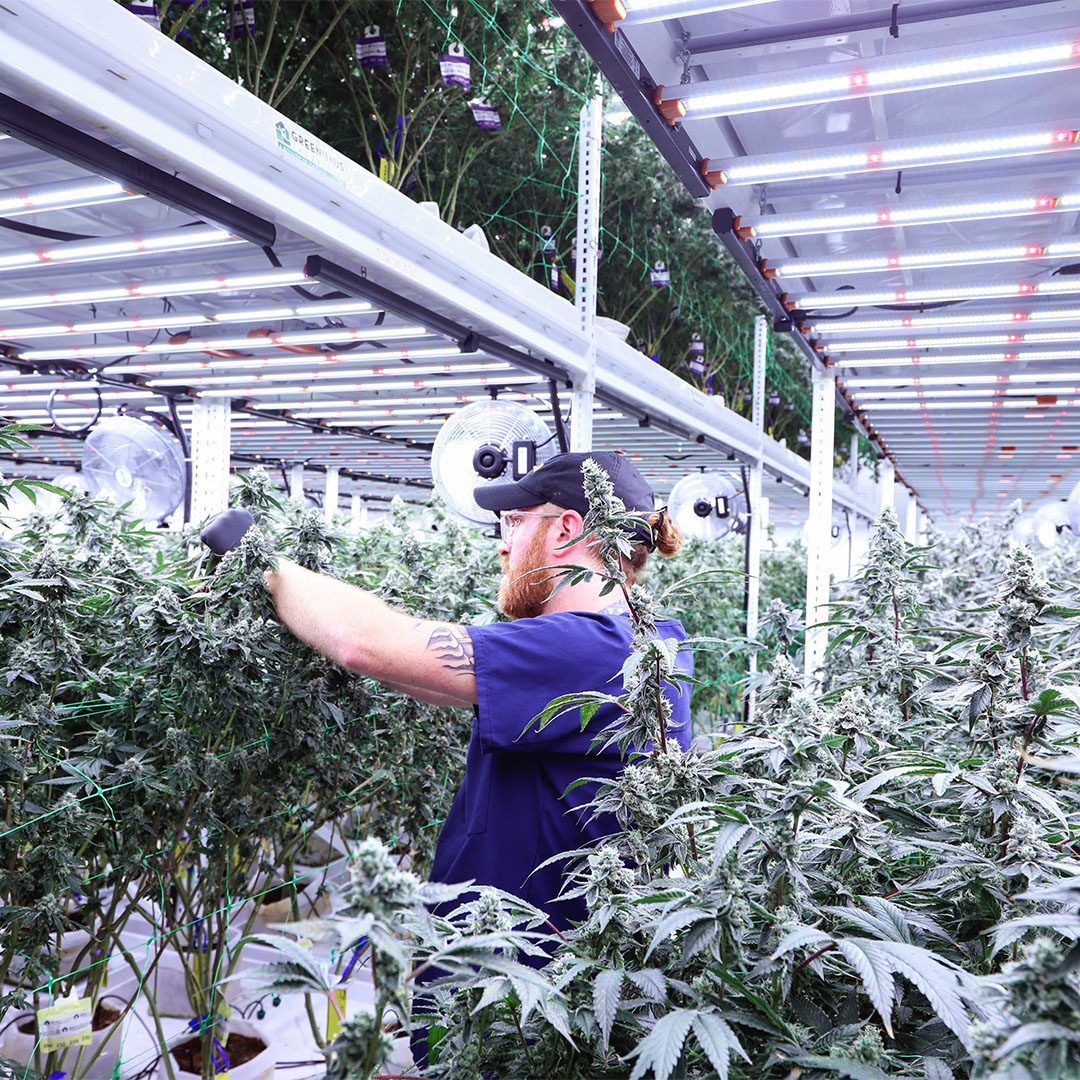
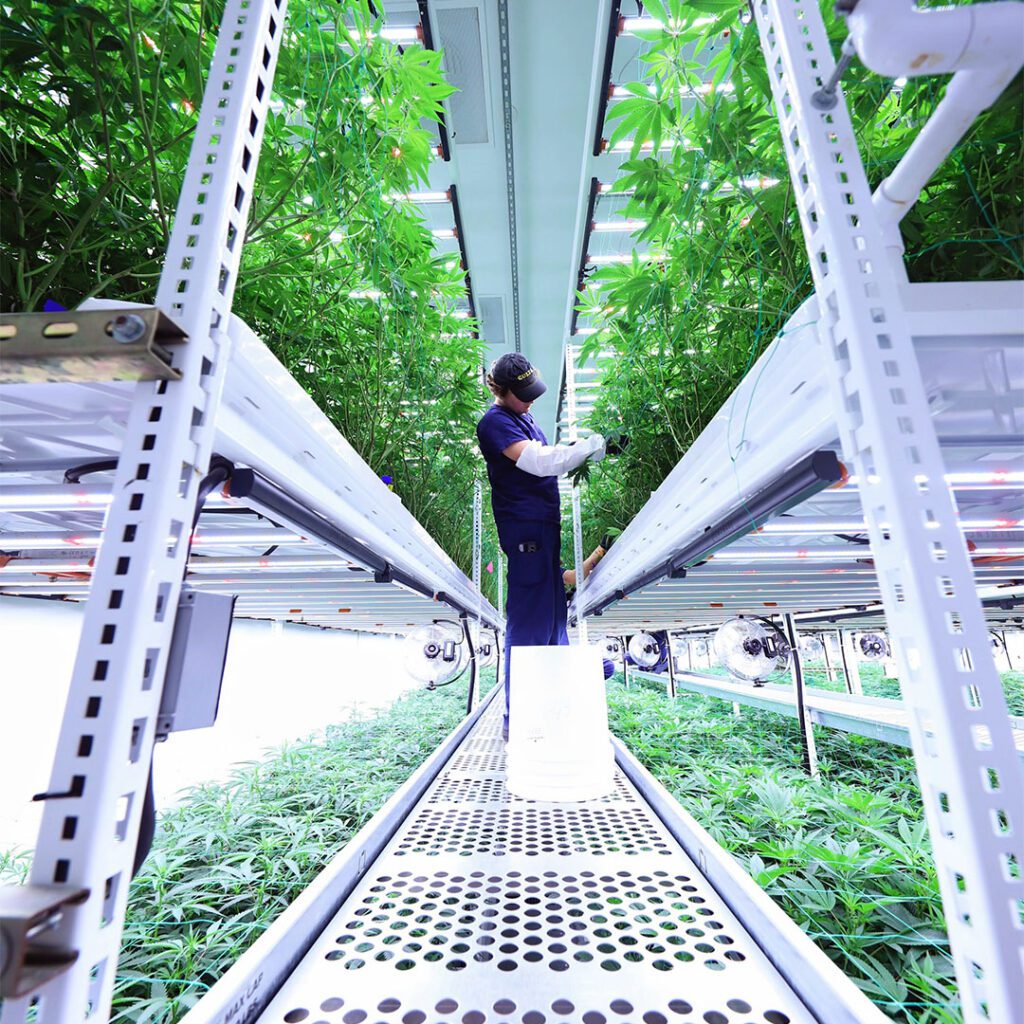
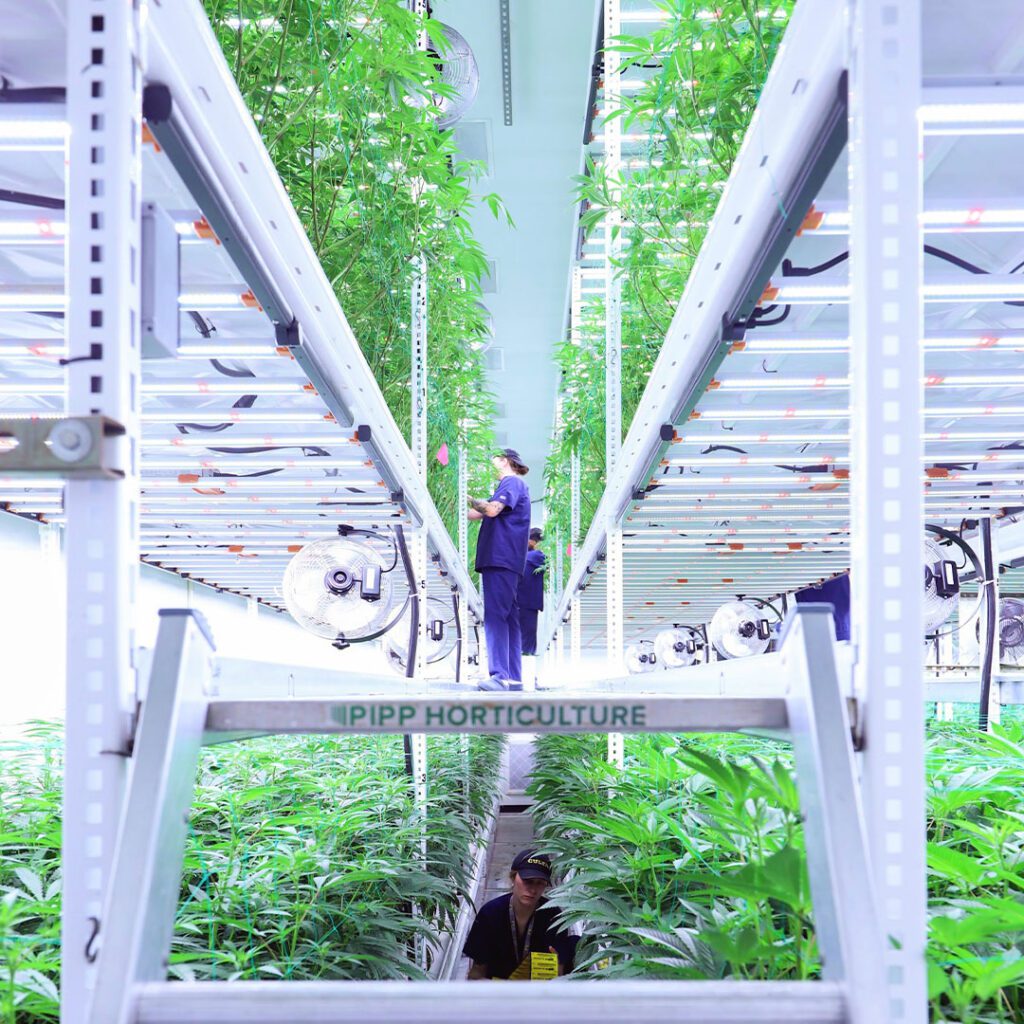
Cannabis Grow Facility Using Multi-Tier Grow Racks with Airflow Solutions by Vertical Air SolutionsAs Michael Williamson, Director of Cultivation at Pipp Horticulture, explains, “Other trays on the market may yellow, crack, or break over time. We make sure everything we develop in-house is made for the long haul. [Our products] allow for seamless integration and maximize all of your footprint.”

Selecting the appropriate drainage system for your vertical farming setup can be challenging. Growers need to consider various factors, including water storage options, filtration systems, water sources, and irrigation strategies. What works for one facility may not be suitable for another, highlighting the importance of customizing your approach based on specific needs. 

For those uncertain about the design process, Pipp Horticulture offers professional recommendations and connections to local service providers. Various drainage systems are available, such as slotted drainage, ejector systems, and trough drainage, each offering unique benefits depending on the specific requirements of the cultivation environment.

Not Too Much, Not Too Little

Every crop needs water to develop, meaning growers must introduce an adequate draining system to capture runoff and prevent oversaturation. Tray selection also plays a critical role in this process, as some are fitted with grid systems to aid in proper drainage. Working with a plumber skilled in vertical racking systems and grow rooms can make a considerable difference when determining the best approach.

Tray Selection

Providing each plant with the perfect amount of water and nutrients is an essential operation of any cannabis facility. In vertical farming, this process is generally automated via some form of irrigation system. Your chosen drainage method will handle most runoff, but trays should also help protect plants from oversaturation. 

The best trays are designed to aid in preventing issues like root rot or plant death due to excessive moisture. Options with built-in or removable grid systems provide an outlet for runoff to reach drains effectively and freely.

Moreover, opt for durable grow trays built to withstand high humidity levels and hefty substrates. Growing media like Rockwool and Coco Coir can be heavy when fully saturated with solution, so girth is an important property to consider. 

Pipp Hort offers a range of grow trays expertly crafted with cannabis cultivators in mind. We recognize the need for reliability throughout the entire growth cycle, from seedling to flowering. 

As Williamson explains, “Other trays on the market may yellow, crack, or break over time. We make sure everything we develop in-house is made for the long haul… This isn’t our first rodeo–[our products] allow for seamless integration and maximize all of your footprint.”

Below are four Pipp tray options to consider:

  • Combination grow tray with optional HDPE inserts: These trays are made-to-order and optimized for Drip-to-Drain or Ebb-and-Flow systems. When desired, HDPE inserts can be installed to improve drainage. 
  • Drip-to-Drain Grow Tray with optional HDPE inserts: Akin to Combination trays, the Drip-to-Drain options are compatible with HDPE inserts for optimized drainage. Each tray features an aluminum base to prevent corrosion, while HDPE grids guard against pesky mold and mildew.
  • Airflow Grow Trays: This sectional tray was designed to eliminate airflow restrictions in a vertical farming system. Trays are perfect for Drip-to-Drain and suitable for any growing substrate, particularly Rockwool.
  • ABS Grow Tray: The ABS tray is Pipp’s lower-cost option constructed from durable plastic and equipped with built-in slopes. Like our other trays, the ABS provides UV stability alongside antimicrobial and antifungal properties.

Types of Drainage System

Selecting a drainage system may seem like a challenging feat. Growers must consider water storage options (e.g., tanks or reservoirs), filtration systems, water sources, and irrigation strategies. What works in one facility may not function appropriately in another, so remember this as you weigh different options.

Cultivators concerned about the design process can contact Pipp for a vetted professional recommendation. Our team has worked with countless experts, and we’re happy to connect you with a local service provider.

Below are examples of drainage systems for vertical farming systems:

  • Slotted drainage: Some vertical farms install drains perpendicularly below rack systems. Runoff simply empties into an on-site reservoir or tank for an easy drainage solution.
  • Ejector system: With this drainage system, water funnels into a catch before being ejected up and out into a reservoir.
  • Trough drainage: With this approach, excess water funnels into a trough via pipes attached to carriages before exiting into a reservoir.

Conclusion

Effective water management is the cornerstone of a successful vertical cannabis cultivation operation. Proper tray selection and drainage systems play a vital role in maintaining plant health and preventing issues such as root rot and oversaturation. By utilizing high-quality trays equipped with grid systems and partnering with experienced professionals, growers can ensure that their irrigation and drainage processes are optimized for maximum efficiency.

Pipp Horticulture’s range of grow trays and tailored drainage solutions provide cultivators with the tools needed to achieve reliable and consistent results. The durability and design of these trays help protect plants throughout their growth cycle, while the various drainage options available can be customized to meet the specific needs of each facility. 

Selecting the right drainage system involves considering several factors, including water storage, filtration, and irrigation strategies. It’s essential to choose a system that aligns with your facility’s unique requirements to ensure smooth operations and prevent potential water management issues. We offer expert guidance and connections to local service providers, helping growers navigate the complexities of the design process.

By focusing on the details of water management and collaborating with knowledgeable professionals, you can enhance plant health, improve productivity, and ensure the long-term sustainability of your cultivation operation.

Cannabis Growers Using Pipp Horticulture at Culta

Get a FREE Grow Consultation

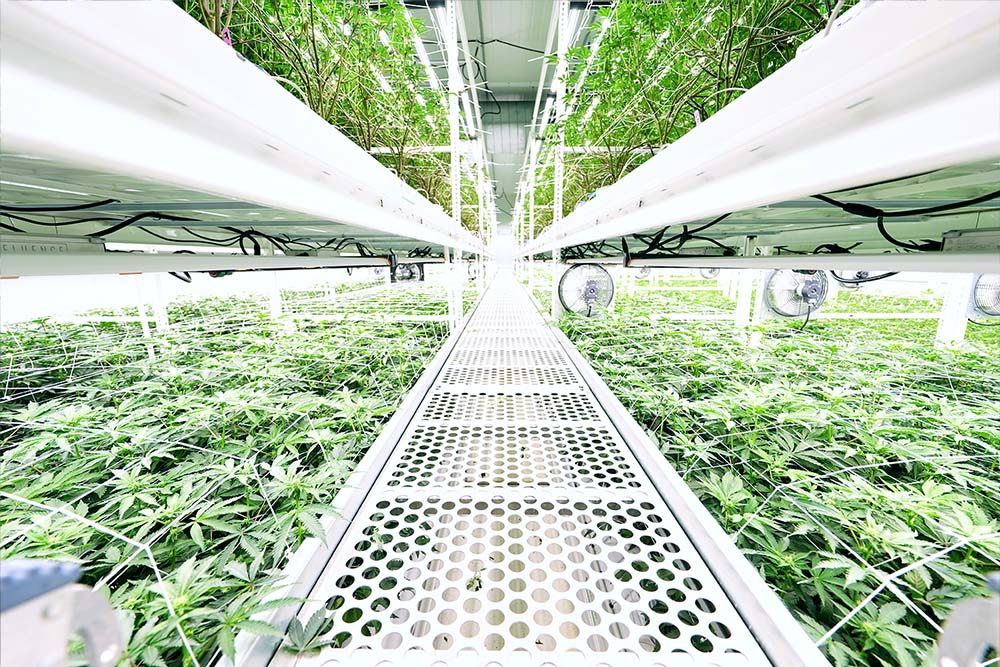
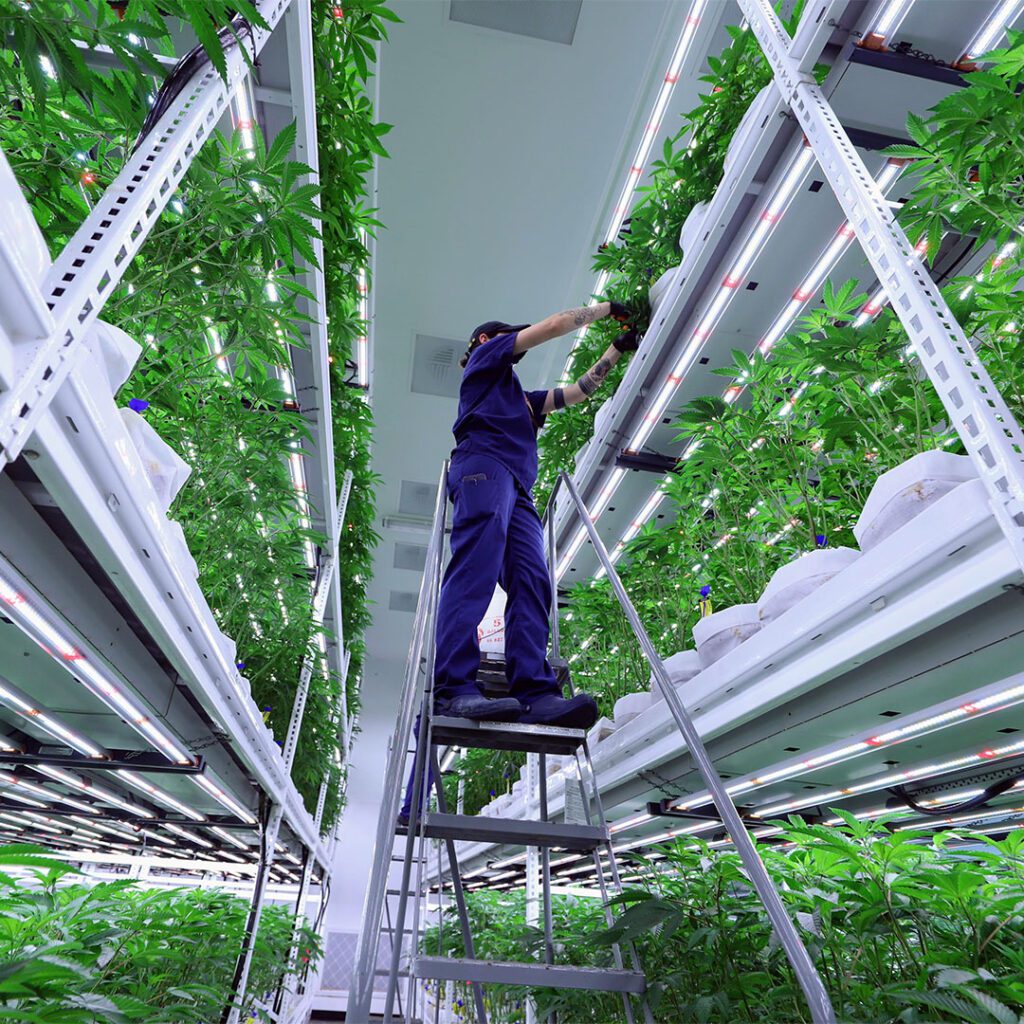
Using Catwalk to Service Second Level of Cannabis Plants

Start With the End in Mind When Laying Out Your Mobile Racks

Start With the End in Mind When Laying Out Your Mobile Racks

Using Catwalk to Service Second Level of Cannabis Plants

When planning your vertical grow room layout, it’s essential to start with the end in mind. The foundation of a successful grow operation begins with choosing the right racking system, one that accommodates your current needs and anticipates future growth. 

Growers must account for several critical factors beforehand, including available space, compliance regulations, and long-term cultivation plans. Overlooking these elements can lead to significant challenges down the road, potentially disrupting your operations and impacting your bottom line.

Working with an experienced team of designers, technicians, and support professionals can help ensure that you make informed decisions and integrate your racking system seamlessly. 

As you develop your plans, room by room, you’ll encounter an array of variables that will help or hinder your aspirations. Understanding the best practices of grow room design and mobile racking capabilities will get you moving in the right direction.

Mobile Racking Decisions

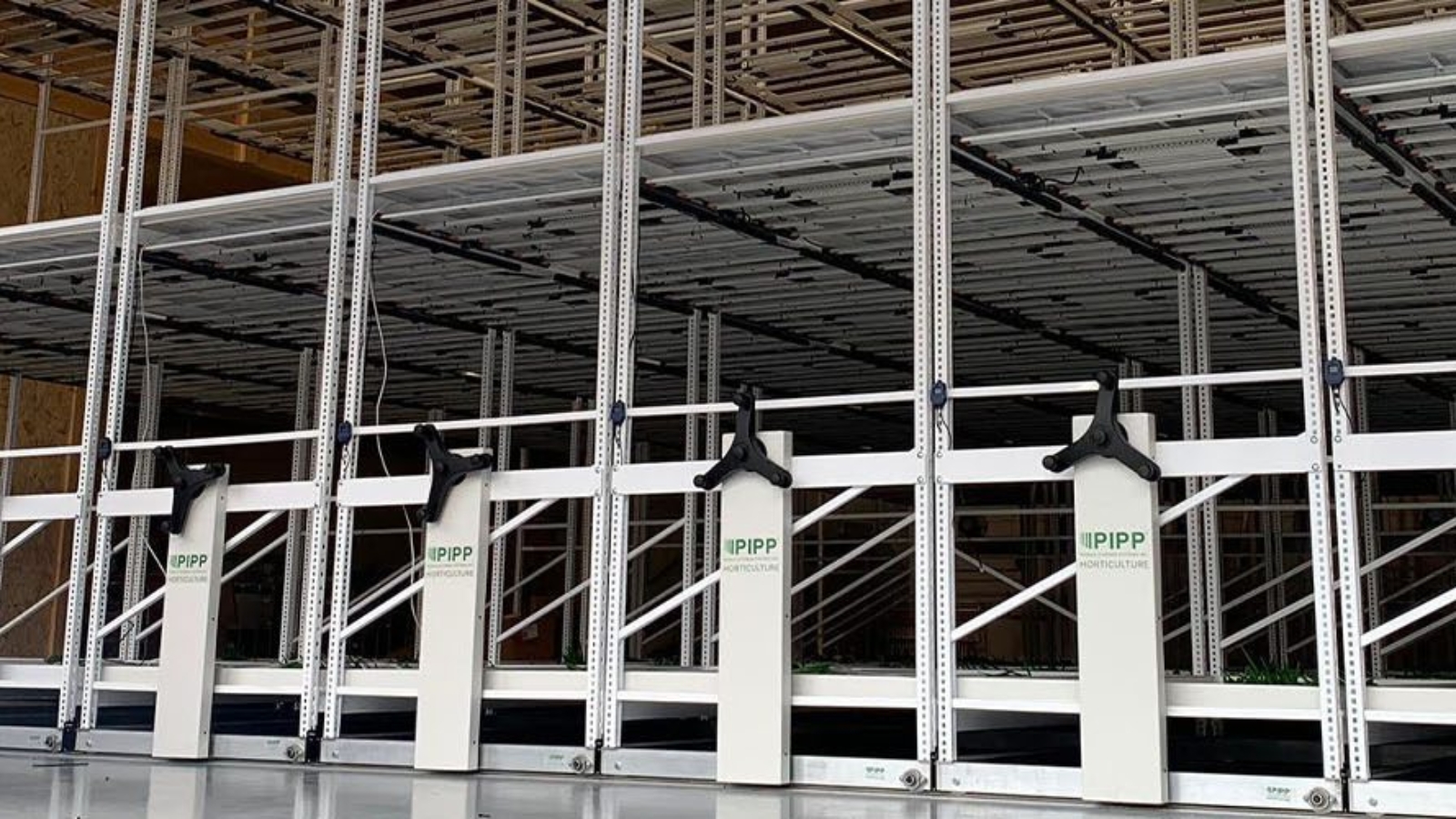
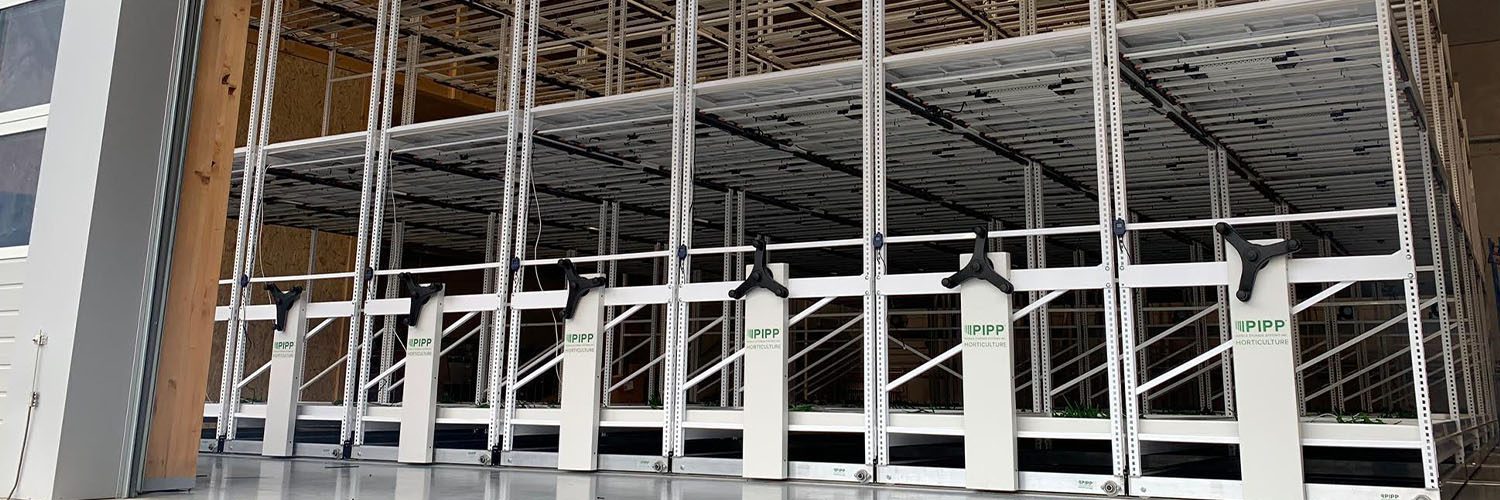
Airflow System for Canna | VAS 2.0The first step in designing a vertical grow room layout is choosing a racking system. Growers must account for various factors beforehand, including available space, compliance regulations, and future cultivation plans. 

Forgetting about these critical considerations can ultimately lead to problems down the road. Our best advice is to always work alongside an experienced team of designers, techs, and support professionals to ensure proper decision-making and seamless integration.

Pipp Vertical Racking Systems are tailored to fit each unique facility. You can use our Room Generator Tool to create an interactive 3D floor plan based on your available canopy space. 

Here are just a few things to consider when integrating a vertical racking system:

Room Dimensions & Obstructions​

The size of your grow room (e.g., length, width, and ceiling height) dictates much of the racking system setup. By calculating the area of your space, your design team can recommend the ideal amount of aisles necessary for your production needs.

Equipment Width & Material​

Racks and grow trays house the heart of your business–your plants. Naturally, you want to ensure these structures are made with top-quality materials to protect your crops from pathogens, pests, and disease.

Pipp’s Vertical Grow Racking Sytems fitted with Mobile Carriages are crafted with cultivators in mind. Each stainless steel, UV-stable rack is covered with an antibacterial and antifungal coating to prevent the spread of plant-killers like mold and mildew. 

Another key consideration is aisle width. Growers should leave ample space for multiple teams to interact with plants simultaneously. Keeping aisles between 36 and 54 inches wide allows for tandem work while helping prevent accidents due to tight quarters.

Compliance​

Compliance laws can vary depending on the location of a facility. For example, some states like California must meet specific seismic regulations in preparation for unexpected earthquakes. In these cases, Pipp’s low-profile racking systems with optional anti-tip features offer an all-in-one solution. 

Regardless, any cultivator can benefit from implementing an anti-tip system. This simple addition can protect plants and employees from harm. In the words of Michael Williamson, Director of Cultivation at Pipp Horticulture, “I can always grow more plants, but I can’t grow more people. So, keeping your employees safe is priority number one.”

Space for Growth

Whether you have current expansion plans or simply exploring the idea, chalking out canopy space for increased yield capacities is a great investment. Doing so doesn’t need to be difficult, either!

Leaving room for growth can be as easy as adding another tier to your vertical racking system. If you need one level at the moment, implementing a second with wiring and HVAC in place means you can add the second level to your current rack setup whenever ready. 

Williamson explains, “When planned appropriately, you know if your electrical distribution is in place from the beginning, you may want to consider building a curb for future [equipment]… having all that prep means phase 2 is as simple as adding a second tier, installing lights and plugging it in.”

Now, a best practice when sizing a veg canopy is to allocate between 20 and 30% of your total flowering footprint to vegetative growth. Square footage may vary if facilities have a combined veg, mother, and clone room as opposed to separate spaces. 

Regardless, the ideal size for a racking system is 32-40 ft. in length and 10-15 ft. in height. Triple-tiered racks are typical, but facilities with smaller inventories may consider double-tiered solutions instead. Regardless, these dimensions set you up for success as you create a functional veg room layout (and they apply to flower rooms, as well).

Safety Measures

When designing a vertical racking system, always assess your space for existing and planned safety measures. Fire extinguishers, smoke detectors, sprinkler systems, fire escapes, and sanitation stations are just a few examples of necessary obstructions that can influence the layout of your grow room.

Cultivators should also train employees on properly using these safety precautions and operating racking systems. Education is key to protecting the well-being of your employees and crops. Pipp’s field experts are available to guide both you and your team as you adapt to new equipment.

In the words of Michael Williamson, Director of Cultivation at Pipp Horticulture, “I can always grow more plants, but I can’t grow more people. So, keeping your employees safe is priority number one.”

Get a FREE Grow Consultation

Fresh Grow's veg room

Fresh Grow’s Mobile Racking Strategy Places Clones and Veg at the Center of Operations

Fresh Grow’s Mobile Racking Strategy Places Clones and Veg at the Center of Operations

Optimizing plant movement through the veg room is essential for maintaining an efficient and productive cultivation process. Everything your team does in the veg room will dictate how your plants thrive in flower up through harvest.  

Fresh Grow, a national cannabis cultivation company, implemented Pipp Horticulture’s mobile vertical racking units to make sure  their operations run efficiently. The company operates in Colorado, Delaware, and New Jersey, recently expanding with a 17,000-sq.-ft. facility in Delaware and a 60,000-sq.-ft. facility in New Jersey. 

Steve Spradlin, National Director of Cultivation for Fresh Grow, shares insights into their innovative approaches and the tangible benefits they’ve seen.

So, how do you identify that ideal site for your facility?

As Pipp Cannabis Operations Specialist Anders Peterson said in a recent webinar, it helps to move methodically through a checklist of sorts, covering utilities, structural support, climate considerations, and fire code compliance. Schedule meetings with all your stakeholders to confirm that your checklist aligns with local regulations and business goals.

Let’s get into it…

Veg Room Setup

The veg room sets thefoundation for plants’ growth cycle. While the fertigation room is literally in the center of Fresh Grow’s building, it’s the veg rooms that fan out from there and kickstart the process for plants moving through the facility. 

Proper racking can significantly impact the efficiency of plant movement and overall workflow within a facility. Fresh Grow’s veg room in New Jersey utilizes a three-tier Pipp rack system for clones, mother plants, and all stages of production. 

The team will soon build out a second veg room, both of which will tee plants up for their eventual 10 flower rooms. 

This veg setup optimizes space and workflow, ensuring every square foot is used efficiently.


Step-by-Step Movement of Plants

Here’s how it works for Fresh Grow: The veg room runs six racks wide by nine racks deep.

Mother plants are located on the bottom rack at the back of the room. This strategic placement ensures that they are easily accessible for taking cuttings while being somewhat protected from the high-traffic areas at the front of the room. 

Cuttings are taken from these mother plants to produce clones, which are then moved to the front of the room. This cyclical process ensures a steady supply of new plants, which is essential for maintaining production schedules.

Clones are placed on the lowest rack at the front of the veg room for easy access and initial care. This allows for frequent monitoring and adjustments as needed to ensure optimal growth conditions. 

Clones are particularly sensitive to environmental changes, so ensuring stable humidity, temperature, and light conditions at this stage is critical. Pipp’s racking systems allow for precise environmental control with integrated lighting and airflow solutions. It’s a matter of balance, and Spradlin’s seen it all. 

“I’ve seen five-tiered grows, two-tiered grows, and three-tiered grows, but with Pipp’s system, we’re able to maximize our canopy square footage efficiently,” Spradlin said. The key to avoiding microclimates is to keep the air moving across those three tiers in a “cyclonic” pattern. By maintaining consistent airflow, his team can move their plants right on time as they move further into their veg cycle.

Once ready, clones move to the next two tiers of Fresh Grow’s racking system for further growth. 

Each tier corresponds to a specific growth stage, which requires careful monitoring and adjustments to environmental conditions. Plants in the initial veg stage require different environmental conditions than those in the cloning stage. Those veg plants will stick together as they disperse into separate flower rooms. 

“That is where we’ve learned the most about the racks, is in veg,” Spradlin says. “I can tell you that for sure.” Other cultivation teams can use their veg rooms to dial in operational efficiencies that will improve distinct areas of the business, too.

Efficiency at Scale

It would be one thing if Spradlin and his team were setting up only their new facility in this way, but Fresh Grow has prioritized scale when it comes to these on-the-ground efficiencies.

SOPs translate from New Jersey to Delaware and back to Colorado. That’s a critical part of Fresh Grow’s multistate growth strategy. This uniformity extends to their nutrient lines, pruning schedules, and trellising events. By standardizing these procedures, Fresh Grow ensures their operations are efficient and scalable, regardless of location.

As an added bonus, it makes internal team transfers super easy. A Delaware employee recently moved to the Colorado location, and it was a seamless experience, Spradlin says.

On a more granular level, he’s seen the day-to-day benefits of mobile racking all over the facility. Cleaning protocol, for one, has improved markedly. Without proper sanitation SOPs, a cultivation facility is working from a serious disadvantage that may have costly ripple effects throughout production. A clean room is a profitable room, after all, and mobile racks make that part of the job much easier. It’s been a revelation, Spradlin says.

“I’ve worked with static racking forever, and being able to just move a rack to clean under it: Holy cow,” he says. “Instead of getting all your hands and knees in a vacuum to get up under there… That’s one of my favorite parts, is you can move it with one finger and you can clean under them.”

Conclusion

The integration of Pipp Horticulture’s mobile racking systems has revolutionized Fresh Grow’s cultivation process, boosting efficiency and scalability. By optimizing plant movement through the veg room, Fresh Grow ensures each growth stage is meticulously managed and monitored. The result? Greater efficiency throughout the facility. Spradlin says that his entire team can sense the improved workflows.

The strategic placement of mother plants and clones, coupled with precise environmental control, highlights the critical role of a well-structured veg room in maintaining production schedules.

The scalability of those relevant SOPs across multiple states has streamlined operations. Implementing uniform nutrient lines, pruning schedules, and trellising events ensures consistency in cultivation practices, no matter the location. This move boosts operational efficiency and supports their growth strategy as a multistate operator.

Moreover, the practical benefits of mobile racking systems, such as easier cleaning protocols, underscore the operational improvements achieved by Fresh Grow. The ability to move racks effortlessly for thorough cleaning has streamlined maintenance tasks, contributing to a cleaner, more productive growing environment. 

As Spradlin emphasizes, the simplicity of mobile racking has been a game-changer for their cultivation facilities.

Get a FREE Grow Consultation

Using Catwalk on Multi-Tier Racks

The Path of the Cannabis Plant: How to Optimize Your Grow Room Layout

The Path of the Cannabis Plant: How to Optimize Your Grow Room Layout

Using Catwalk on Multi-Tier Racks

Creating efficient, profitable cannabis grow rooms requires thoughtful planning. Plants demand different levels of care throughout the growing process. How you arrange them along the way will play a vital role in ensuring healthy movement and development. 

Your facility floor plan must include distinct rooms for propagation, mother, veg, and flower. This ensures proper care, productivity, and limited risk of cross-contamination. 

Additionally, multi-tiered vertical farming solutions provide even more space while allowing cultivators to continue monitoring pH levels, nutrient content, and humidity with ease. Using the right racking systems is paramount in maintaining consistent air circulation and light filtration.  

Accounting for current and future needs when designing a grow room can be daunting. However, we can help you craft a facility equipped with optimized growing systems, layouts, and workspaces to boost profitability and longevity in the cannabis industry. 

How to Set Up Grow Rooms for Plant Movement

Vertical FarmingCultivators must account for various factors when designing a cannabis grow room, such as ease of access to plants, airflow, irrigation systems, and structural elements. Vertical farming techniques solve many of these problems, as growers can smoothly integrate automated environmental controls to monitor water, nutrients, and humidity levels. 

Other factors to consider when building a cannabis grow room include:

  • Ceiling height
  • Drain locations
  • Current workflow
  • Installation timelines
  • Potential obstructions to plant access
  • Local municipal building codes
  • Door locations
  • Ground level

1. Mother Room

Your mothers secure future crop yields. Keeping them happy and comfortable in their vegetative state ensures you can continue cloning and cultivating new plants. An efficiently managed mother room will account for individual genetics and incorporate nutrient management, pest, and pathogen controls. These carefully curated practices foster consistency and reliability.

Many cultivators have opted for double-tiered racking systems rather than single-level layouts in their mother rooms. This change allows for growing additional genetics or housing new and older mothers in the same area. Larger facilities may even consider triple-tiered systems if budget and space allow. 

When considering multi-tiered systems, growers must remember the importance of good ventilation. Proper airflow maintains stable temperatures and humidity levels while guarding against pests and mold. In-rack airflow Systems like Vertical Air Solutions (VAS) can be built into tiered racks for seamless, even air distribution (we’ll touch on this further below), freeing more space for easy plant access. 

Ensuring Sanitation and Hygiene

One thing to note when building a cannabis mother room is sanitation. Cross-contamination can ruin your efforts to cultivate productive, healthy mother plants. Therefore, never use cart systems intended for mothers outside the mother room. Ensure other grow rooms are supplied with enough equipment to sustain current and future needs.

2. Clone Room

Clone rooms, also known as propagation rooms, are designed to encourage healthy root development in new plants or cuttings. However, this space is not inherently necessary for every operation. Smaller cultivation centers can combine veg and clone rooms to save on resources and space. Still, 2-5% of the total floor plan should be dedicated to this stage of cannabis growth. 

If growers are using one room for multiple purposes, proper considerations should be taken when approaching the layout. 


Generally, cultivators should keep clones with vegetative plants rather than mothers. Less traffic in the mother room protects genetics and mother-plant health. 


Combining clones and veg plants in one space can expedite the transplanting process once clones are ready for vegetative propagation. Clones can be placed in the same racking systems as your veg plants but be sure to adjust the light levels lower to accommodate their needs.


For larger CEA operations, a dedicated clone room incorporating a multi-tiered rack system is ideal for optimal plant movement. One triple-tiered wired mesh cart can house between 300 to 600 clones. In the end, many of your design choices will be budget and scale-dictated.

3. Veg Room

VAS 2.0 | Airflow SystemMulti-tiered systems are most commonly seen in veg rooms. In the beginning days of cannabis cultivation, growers did not have enough vegetative space to keep flower rooms supplied. In response, they took advantage of cubic footage by growing upward rather than outward.  

Now, a best practice when sizing a veg canopy is to allocate between 20 and 30% of your total flowering footprint to vegetative growth. Square footage may vary if facilities have a combined veg, mother, and clone room as opposed to separate spaces. 

Regardless, the ideal size for a racking system is 32-40 ft. in length and 10-15 ft. in height. Triple-tiered racks are typical, but facilities with smaller inventories may consider double-tiered solutions instead. Regardless, these dimensions set you up for success as you create a functional veg room layout (and they apply to flower rooms, as well).

4. Flower Room​

The flower room is the heart of operations and harbors the potential for your business–this is why layout and design are so critical.

Increasing yield is of the utmost importance to any cannabis cultivator. So, how can an efficient flower room boost profitability and efficiency?

Ultimately, layout, engineering, and equipment will determine your ability to achieve desired metrics. A well-designed space can produce two to three times more than a poorly drafted setup. Having an optimized operation gives you a leg up over competitors and ensures you’re equipped for evolving market demands. 

Technologies, automation systems, and HVAC are essential components, but your floor plan is the foremost factor to consider. Plants should be spread equally to ensure proper development and consistent growth. Your crew must also have access to them for scouting, cutting, and transporting.

Modular systems solve both needs in one easy-to-navigate system. First, vertical racking systems maximize space and are seamlessly integrated into a current footprint. Second, growers can further boost capacities by adding mobile carriages, allowing for flexibility when expanding or rearranging floor plans. 

Two-tiered solutions are the most common, but some facilities can accommodate three tiers. Remember–populate vertical growing systems with grow trays that are compatible with automated technologies to enhance functionality and yield.

Here are additional factors to consider when optimizing a flower room:

  • Environmental control systems: Consider including programmable logic controllers (PLCs) in your design. These controls can monitor how plants respond to subtle environmental changes, such as lighting and airflow. Using this information, you can gauge whether or not your current setup facilitates healthy plant growth and movement. 
  • Proper airflow: Adequate airflow ensures proper humidity and temperature control while reducing the risk of contamination, pathogens, and mold. Multi-level airflow systems address these concerns by ensuring every tier receives consistent air movement. This technology can be easily integrated into multi-tiered racking systems. 
  • Irrigation and fertigation: Don’t forget about irrigation systems when optimizing your grow room for plant movement and growth. Automated drip or hydro setups are great because they require minimal space and can prevent mishaps from stray hoses or cumbersome equipment. 
  • Multiple cultivars: Different cannabis strains have unique phenotypes. Growers can adjust vertical racking systems to accommodate both tall and short plants.
  • Light mapping: Your flower room design will rely heavily on light mapping. You can use software to determine where plants can receive optimal exposure and distribute accordingly.

Planning for Future Growth

Always factor in your goals for expansion before you design your indoor grow rooms. Modular setups are typically best because they ensure growers can easily integrate new sections into each space. Incorporating additional modules requires less downtime, saving you resources and money.

A multi-tiered grow room setup can mean a higher upfront investment. 

However, vertical farming greatly increases capacity, both square and cubic footage, which boosts potential yield and profitability. Growers have a more efficient indoor cultivation strategy with the added advantage of room for future augmentation. 

Below are a few other things to consider before building a grow room:

  • Financial pro forma: This plan will guide you as you design a CEA operation. A financial pro forma should include initial building, operating, testing, labor, and utilities costs. You should also factor in potential profits and selling prices.
  • Your goals: Where do you see your business down the road? Are you comfortable with your current growing capabilities? Grow room designs should account for potential year-round production, specific strains, or crop-rearing methods.
  • Environmental resources: Ensure your location has the proper facilities to provide optimal environmental control. Consider energy availability, water quality, labor availability, and proximity to your target market.
  • Room for automation: Leave space for additional automation if you anticipate larger production. Additional plants could mean integrating more pest management, nutrient dosing, humidity control, and CO2 enrichment systems. 

Pipp is here to help with all your grow room needs. We can guide you through designing a space that meets current market requirements and accommodates expansion. Our innovative solutions are excellent for any cannabis cultivator–whether you’re a beginner, expert, or somewhere in between.

Get a FREE Grow Consultation

Site Selection

Site Selection for a New Cannabis Grow Facility

Site Selection for a New Cannabis Grow Facility

Site Selection

Your team is gearing up to build a cutting-edge cannabis cultivation facility, and you’re collaborating with a design team to ensure meticulous planning and execution every step of the way. Proper site selection is one of the most crucial decisions to make in the early stage of the process. Taking a thoughtful approach to choosing your site can prevent costly upgrades and compromises later on. 

So, how do you identify that ideal site for your facility?

As Pipp Cannabis Operations Specialist Anders Peterson said in a recent webinar, it helps to move methodically through a checklist of sorts, covering utilities, structural support, climate considerations, and fire code compliance. Schedule meetings with all your stakeholders to confirm that your checklist aligns with local regulations and business goals.

Let’s get into it…

Initial Site Considerations

#1: Utilities

Before committing to a location, assess the available utilities. After all, you need a great deal of power to run your operation, and you’ll want to consider any long-term expansion plans for your business.

Peterson said that, in most cases, your team will need to augment your site’s power capabilities. “More often than not, you’re going to have to run additional power to these facilities, sometimes gas,” he said. “Most commercial buildings today just don’t have the infrastructure that indoor grows need. That’s why it’s good to locate a building close to a denser area that has a pretty established grid.”

Conduct a thorough load assessment to verify the availability of three-phase electrical connections for HVAC systems, grow lights, and irrigation. 

If natural gas is required for heating or CO2 enrichment, consult with local utility providers to determine whether extending existing gas lines is feasible. 

For water supply, perform a pressure test to ensure the system can meet the demands of irrigation. 

Action Item: Obtain blueprints from the utility companies for an accurate understanding of the current infrastructure.

Vertical Farming

#2: Structural Support

Bear in mind that most commercial building roofs weren’t designed to support controlled environment agriculture (CEA). Get out in front of that problem as early as possible. 

“Most of the roofs on commercial buildings aren’t designed to support the heavy HVAC equipment required for indoor cultivation,” Peterson said. 

Have your team perform a roof load analysis to check the live load capacity and consider ground-level equipment installation to reduce pressure on the roof. Plan space around the building for generators, chillers, and fans without obstructing parking or delivery access. Work the space from all angles (building needs, people needs, plant needs). 

Action Item: Hire a structural engineer to inspect the roof and foundation for load-bearing capacity.

Pipp Horticulture

#3: Climate Impact

The local climate will affect your HVAC system’s efficiency. Now, your business may be tied from the get-go to one climate over another. (Let’s say you’re bound to the state-licensed market in Ohio, for example, or Connecticut. California may be another story entirely.)

Extreme temperatures, humidity, and seasonal changes can greatly impact HVAC efficiency and performance. Consult historical weather data to adjust HVAC system sizing and ensure you can maintain ideal room conditions. 

Action Item: Obtain historical climate data and cross-reference with HVAC specifications to confirm equipment performance under expected conditions.

Specific Site Selection Factors

#1: Floor Condition

Multi-level mobile racking requires a strong foundation. “You need to make sure that the foundation is good and well-suited for that application,” Pipp Product Manager Del Rockwell said. 

Core drilling can confirm the slab’s depth and uniformity for supporting mobile racking. Cracks or uneven surfaces can undermine stability. If flaws are identified, consider resurfacing or replacing the slab with high-strength concrete. 

Action Item: Commission a geotechnical survey and core drilling to verify the slab’s condition and calculate necessary repairs.

#2: Column Spacing

Column spacing impacts mobile racking layouts, so get a good sense of the literal square footage available on the floor.

“Column spacing … can cause a lot of issues with laying out the racking.,” Rockwell said. 

Plan for a minimum 40-foot span to minimize obstructions and provide ample support for overhead systems. Conduct a structural analysis to ensure the columns can withstand extra loads from HVAC equipment and irrigation piping. 

Action Item: Create or study detailed blueprints indicating column positions and calculate load capacity before designing the rack layout.

Cannabis Growers Using Pipp Horticulture at Culta

#3: Ceiling Height

The ceiling height must accommodate multi-level cultivation tiers. “Ceiling height can absolutely cut off your headspace and eliminate some cultivation tiers,” Rockwell said. 

Ideally, the ceilings should be at least 16’ to accommodate multi-level racking. But they can be installed in spaces with as little as 10’ high ceilings and tighter spacing between grow levels. 

Confirm the clear height for multi-tier systems and assess whether mezzanines or beams will obstruct usable space. Plan for ductwork, lighting, and irrigation systems to maximize growth potential. 

Action Item: Use laser measurement tools to map out the usable height for each rack tier, adjusting for overhead equipment.

Fire Code Compliance

#1: Local Regulations

Engage with the local fire marshal early to ensure the facility adheres to local fire codes. Local community communication is paramount in those early days.

“Try to do everything you can to make that a smooth interaction,” Rockwell advised. 

Network with other cultivators who have successfully navigated the local fire codes to identify common issues and best practices. 

Action Item: Schedule a preliminary consultation with the fire marshal to review plans and obtain feedback on compliance strategies.

#2: National Standards

Monitor the progress of NFPA 420, the National Fire Protection Association’s new standard for cannabis cultivation. Sign up for proactive email updates, too. Stay updated on regulatory changes to ensure your facility is compliant. 

Action Item: Sign up for the NFPA newsletter to receive updates and download relevant guidelines.

Conclusion

Planning a new grow facility requires collaboration between experts, clear communication with regulators, and careful analysis of utilities, structural support, and fire safety. 

By considering floor conditions, column spacing, ceiling height, and HVAC loads early in the process, facility managers can minimize delays and create a highly efficient and compliant grow facility that thrives.

Get a FREE Grow Consultation

Pipp Horticulture at Freedom Green

Why Vertical Farming Is Important in Urban Real Estate Markets

Why Vertical Farming Is Important in Urban Real Estate Markets

Pipp Horticulture at Freedom Green

At least two trends are converging for the controlled environment agriculture (CEA) industry: a slow commercial real estate crash in major American cities and broad inflation on input costs. Cannabis growers especially need to get as much bang for their buck on their indoor cultivation facility, and urban settings are perhaps a surprising source of possibility now. 

Following the pandemic, major cities like Washington, D.C., New York City and Denver hoped to flip newly vacant office space into residential units. That hasn’t entirely worked, partially because of consumer inflation concerns. 

That opened an opportunity to rethink warehouse and office space in the light of a rising CEA industry

For cannabis growers, these spaces can be especially appealing

In most cases ( depending on state law), cities provide proximity to retail distribution and broad customer bases. To facilitate cannabis cultivation and other CEA practices, these areas tend to already have robust infrastructure, which is essential for the high energy and water demands of this industry. 

With the U.S. cannabis market projected to grow from $115 billion in adult-use sales in 2024 to $170 billion in adult-use sales in 2028, there’s a wave of new businesses on the threshold of licensure or expansion that may thrive in more urban environments. 

Here are three benefits (and challenges) of building out an indoor cultivation space within urban city centers.

The Benefits of Vertical Farming in Cities

#1: Maximizing Space Utilization

A primary hurdle to this type of CEA development has long been cost. In mid-sized and larger American cities, commercial or industrial real estate is often expensive and limited in availability. This is changing in the post-pandemic real estate market, but those long-standing challenges have often kept cannabis businesses, strapped for cash early on, from setting up shop in city environments. 

Vertical farming addresses this constraint by expanding overall canopy upward, doubling or even tripling the actual grow space. For businesses acquiring land or real estate that may not be as expansive as an industrial footprint in a more rural community, vertical farming lets growers exponentially increase their production capacity in a given room. 

This spatial efficiency is crucial in densely populated areas, making vertical farming particularly appealing to city planners and developers looking to attract new business to their jurisdiction. 

Buckeye Relief, based in Eastlake, Ohio, just east of downtown Cleveland, built out a new facility and eventually saw the need to expand upward. Early on, the Buckeye Relief team ran into environmental trouble with an original site, so they pivoted to a 10-acre plot of land offered by the city of Eastlake. It fit the company’s needs for the medical cannabis market, but expansion would be inevitable. 

Mobile racking on the company’s initial single-tier setup helped them achieve their expansion to a second tier within the existing footprint of their facility. Future footprint expansions are one thing, but growing up and adding vertical tiers to a given production facility can provide significant returns. 

Now, the company runs two tiers of production space, and they are preparing for the rapidly expanding customer base that will come from the greater Cleveland area once adult-use sales begin (following legalization in November 2023).

Two Level Grow Benches by Pipp Horticulture at Freedom Green

#2: Reducing Environmental Impact and Water Use

Vertical farming in a closed environment allows grow teams to cut back on water and nutrient use, generally. Water use efficiency is especially important in more urban neighborhoods, where resources are under constant pressure from the dense populations they support. 

Research is ongoing on this topic, but vertical farming has proven in some studies to reduce water usage significantly. In one 2023 study, vertical farms reduced water use by 28% to as much as 95% compared to greenhouse environments in the same region.

Pipp Horticulture at Sozo

#3: Shielding Your Crops from Tricky Environmental Conditions

In environments like California and its hyper-competitive cannabis market, growers across the state are competing with small outdoor farms. Those smaller farms can reap serious benefits from a photoperiod perspective; nestled in Humboldt County groves, many farms achieve optimal microclimates and draw ideal sunlight for their plants. They’re also exposed, of course, to the elements and a rapidly changing climate.

Vertical indoor farming can surmount a lot of those challenges. 

James Cunningham, CEO of Fog City Farms, told us in a recent podcast episode, that moving into the vertical farming segment provided his company with a competitive advantage–and a space to accelerate research and development ideas. 

“You can achieve a consistency that you can’t achieve in other growing platforms,” he said. “The distance between your light bars and the [light] throw, and intersecting lighting patterns is so consistent throughout the space that you get very consistent [plant] development.” 

Those conditions are ideal for businesses developing end products for a brand, which is a paramount concern right now in cannabis. Consistent products and engaging delivery on retail shelves are must-haves in most cannabis markets. 

Fog City Farms is based in Watsonville, Calif., just outside Santa Cruz, and it is a fine example of this mid-sized city real estate market opportunity.

The Challenges

Of course, the story is not all rosy. The cannabis business is nothing if not complicated.

Setting aside the bevy of production challenges in cannabis cultivation just on face value, the prospects of acquiring real estate and setting up a vertical grow offer their own unique roadblocks that must be overcome:

#1: Zoning

Zoning regulations will vary from one jurisdiction to the next, but, nonetheless, indoor cannabis cultivation has always faced an uphill battle.

While the density of cities will place your cultivation business near its retail base, there’s a trade-off. Most zoning regulations come with buffer language and even limits on the number of cannabis businesses that may be allowed to operate. 

That buffer language often includes certain distances that businesses must place between their facility and schools, daycares, or churches. In a city environment, this is difficult. 

As far as the limits on cannabis businesses, some cities do not necessarily distinguish between dispensaries and cultivation operations; a city that allows a lot of dispensaries to open up shop may leave few, if any, cultivation licensing opportunities on the table.

As more cities recognize the economic benefits of supporting urban agriculture and cannabis industries, there may be a shift toward more accommodating policies. This is a great example of where active cannabis businesses can get involved with local legislatures and regulatory bodies to bring about some change for the industry.

#2: Community Engagement

Speaking of working with local government, it’s important for businesses planning on acquiring real estate in a city to remain mindful of the existing community. 

As with all business development issues in cannabis, the surrounding community of people must be considered. This is partly due to the slowly dying stigma that accompanies the industry and also partly because cannabis is broadly seen as an industry capable of delivering tremendous returns to the local community. 

To fulfill that promise, business owners who run vertical farms in cities must listen to their neighbors’ questions and comments.

Pipp Horticulture at Freedom Green

#3: Conversion Costs

New builds are possible and perhaps even ideal when considering a footprint in a major city, but retrofitting an older warehouse is a common enough development plan for cultivation businesses. This is where the real estate opportunity lies, as mentioned earlier. 

However, as the commercial real estate market cools in some cities, brokers and business owners must be very knowledgeable about what they’re looking for in a building. Retrofitted spaces will deliver all sorts of unique challenges and costly work. A cultivation facility, especially one that’s set up vertically, has very specific requirements tailored to its operational needs, making the adaptation of existing structures complex and often costly.

When operators consider moving into a pre-existing building, they frequently encounter the need for substantial upgrades to accommodate the specialized infrastructure of cultivation operations. Notably, these facilities require elaborate setups for mechanical, electrical, plumbing, and irrigation systems. 

These systems typically involve heavy equipment and extensive piping, which are often mounted on or suspended from the roof. Upgrading the HVAC system is one of the most important processes in a retrofit project, as highly sterile vertical grow environments demand great efficiency (as opposed to whatever types of businesses the building may have housed previously).  

Also, consider a closed-loop recycled water system, which can generate the resource conservation benefits mentioned earlier. This is a significant upfront cost. 

One pivotal problem arises because most conventional roof structures are not engineered to bear such heavy loads. This mismatch means that the roof must often be structurally reinforced to prevent integrity issues.

Conclusion

In summary, the intersection of declining commercial real estate demand in cities and rising agricultural costs opens a valuable opportunity for vertical farming in urban areas. Although high property prices and complex regulations pose challenges, repurposing vacant office and warehouse spaces offers a promising solution for CEA. Vertical farming systems can capitalize on existing city infrastructure to maximize productivity and minimize environmental impact.

Urban vertical farming makes efficient use of limited space and allows growers to be closer to dense consumer markets, reducing transportation costs and spoilage while boosting food security. By adopting vertical farming practices, producers can create sustainable, technologically advanced cultivation facilities that meet changing regulatory standards. This approach aligns with global trends toward urban resilience and sustainability, providing economic growth while meeting consumer demand for fresh, eco-friendly, and locally sourced products.

Repurposing commercial real estate for vertical farming can transform city landscapes, offering a sustainable, efficient, and cost-effective solution that helps address food security and climate change challenges.

Get a FREE Grow Consultation

[CHECKLIST] 10 Safety Tips in the Grow Room

[CHECKLIST] 10 Safety Tips in the Grow Room

Pipp Horticulture at Candre

Grow Room Safety Is Key

The indoor cannabis cultivation environment is an exciting place, one brimming with life and growth. You’ve no doubt hired a supremely talented team to run the operation, but general reminders about grow room safety are always welcome.  We have compiled 10 simple but essential tips for maintaining high safety standards in your grow rooms. These tips are meant to be regularly applied, as safety is an ongoing process. Encourage your team to consistently review and adhere to the safety protocols for your grow room.

1. Check Your PPE on a Regular Basis

Personal Protective Equipment (PPE) protects employees from exposure to hazardous substances, plant allergens, and other physical injuries. PPE may include items such as scrubs, Tyvek suits, gloves, hair nets, beard nets, shoe covers, protective clear glasses, and masks. 

Regular PPE inspection checks and immediate replacement of worn, compromised, or damaged PPE are vital to maintain high safety standards. Doing so will ensure that workers are adequately protected against potential risks from fine plant particulate matter. In addition to protecting employees, PPE, when used correctly, can reduce the risk of spreading biological contaminants, pests, and diseases.

The correct use of PPE not only complies with health and safety regulations but also fosters a culture of safety and sanitation within the workplace. Creating a culture with a strong foundation in safety is critical for any operation.

▢ Conduct regular PPE checks and replace any worn, compromised, or damaged equipment immediately.

Cannabis Cultivators Using ELEVATE by Pipp to Access 2nd Level Multi-Tier Racks

2. Understand Stability with Mobile Racking

Mobile racks and multi-tier cultivation have been accepted by most commercial cultivators as they allow cultivators to maximize the total canopy of any given room compared to single-tier cultivation. Any time an employee is working off the ground, whether it be on a ladder, platform, or lift, it is important to be properly trained and mindful of all associated safety protocols set in place by the company.

Staff training is important to prevent unnecessary injury, even on something as routine as moving mobile racks back and forth within the grow room. It is important to always visually inspect the top and bottom of the open mobile aisle before moving any racks to ensure it is free of any employees who may be working in the aisle. Keep in mind that it is not uncommon for employees to work below the canopy on rolling stools, squatting, or sitting on a bucket, and they may be hidden from plain sight if looking for heads above the canopy. ***Pro Tip – Use magnetic high visibility flags that can be easily attached to the end of the racks to indicate workers are present. 

Make sure that employees understand how to engage locking mechanisms on all mobile racking units when not in use to prevent unintended movement. Mobile racks are available with an Anti-Tip Track, as well, which is required in seismic zones. Employees should never climb up on racks or trays. 

Implement a checklist for periodic safety checks of your mobile racks’ wheels, tracks, and locks.

Two Level Grow Benches by Pipp Horticulture at Freedom Green

3. Understand Weight Distribution and Load Capacity

On a similar note, make sure employees understand and adhere to the weight limits of the platform cat-walks and the racking system, as it is crucial to prevent employee injury and/or damage to the equipment.

Regular inspections should be conducted to ensure that racks are not overloaded and that employees are using the equipment correctly and safely. After any employee safety education training, ensure employees thoroughly understand the training through exercises such as tests and/or “train-the-trainer.” Once the training is completed and the employee has passed any tests, it is important to have the trainer and employees both sign their names on a training document that acknowledges that the employee understands the training and the risk when safety procedures are not adhered to. 

Pro Tip: Safety training is not a one-time event. Employees should be re-trained annually or even more frequently if unsafe work is observed. 

Document all safety training. Ensure employees are adequately trained, tested, and have signed off on receiving and understanding the training. 

Label your racking units with maximum load capacity.

4. Monitor Your Electrical Connections with Thermal Imaging


Given the extensive use of electrical equipment in cannabis cultivation, electrical safety is important to prevent fires, shocks, and equipment failures. Proactive inspections help identify potential hazards early. This protocol helps maintain electrical systems safely and efficiently. 

Lights can overheat if not properly installed or if the electrical infrastructure is overloaded. Implementing monthly inspections allows for the early identification of potential hazards, such as frayed wires, loose connections, or overloaded circuits, which are common issues that can lead to serious accidents. 

During these inspections, use a thermal imaging camera to detect hot spots invisible to the naked eye, indicative of electrical overload or failing components. This proactive approach minimizes downtime and protects both the workforce and the investment in cultivation infrastructure.

Perform monthly inspections of all electrical equipment and wiring, looking for signs of wear or damage.

5. Develop a Chemical Storage Protocol

Proper chemical storage and handling are essential to prevent spills, contamination, and exposure to toxic substances. Establishing a clear protocol, including a spill response plan, and reviewing it regularly with the team minimize the risk of accidents. All flammable chemicals should be clearly labeled and stored in an approved lockable flammable cabinet. All pesticides and fungicides should be stored in a dedicated and lockable cabinet and be separate from any cleaning and/or sanitation chemicals. Isopropyl alcohol spray bottles and bleach spray bottles are commonly used across cultivation facilities. These spray bottles should be clearly labeled with the date, chemical name, and any dilution ratio.

Create a chemical storage and handling protocol, including a spill response plan, and review it with the team quarterly.

Cannabis Growers Using Pipp Horticulture at Culta

6. Stretch! (Seriously)

Consider a 5-10 minute group stretch at the start of each shift. Ergonomic practices like stretching help prevent injuries common in cultivation tasks that involve repetitive motions, bending, lifting, and prolonged standing. This is also a great opportunity to communicate any important information to the employees about priorities, goals, challenges, or issues to be aware of. 

This simple yet effective routine can significantly reduce the incidence of work-related discomfort and injuries, enhancing productivity and employee satisfaction. It can also be a simple way to add some fun team-building to each day’s work.

Stretching can also elevate team morale. The high demand and repetitive nature of cannabis cultivation can place significant stress on employees, potentially impacting their mental health, morale, and productivity. Establishing a supportive workplace culture through simple activities that encourage a pause in the workday hustle can also prevent burnout in addition to enhancing team morale.

To reduce the risk of injuries, implement a 5-10 minute group stretch for the team at the start of each shift.

Mobile Grow Racks by Pipp at Culta

7. Prepare for Emergencies

You never know what can happen in a dynamic environment like an indoor cultivation facility. 

Conducting emergency response drills, including fire evacuation and first-aid scenarios, is critical to ensure staff are prepared for any potential emergencies. 

These drills, ideally held twice a year, help familiarize the team with emergency procedures, improving the speed and effectiveness of the response to actual incidents, thereby minimizing potential injuries and damage.

If employees are allowed to wear headphones or earbuds during their shift, it is important to implement a one-ear-only rule, which allows employees to keep one ear free of any music, podcasts, etc., so that in the event of an alarm, they can hear it and react quickly. Some cultivation rooms can be very loud from HVAC and other noisy equipment; it is important to have not only audible alarms but also visual alarms like strobes that can help make employees aware there is an issue. Walkie-talkies are a helpful and economical tool for prompt communications on a daily basis, but especially during an emergency.

You can also get more specific with these trainings down to the individual level. Conducting regular first aid training and emergency response drills empowers employees to act quickly and effectively in case of accidents, injuries, or health emergencies. Having a well-trained team can make a critical difference in minimizing the impact of such events, making this an essential component of any safety program. Making first aid kits easily accessible throughout the cultivation facility and ensuring that all employees know how to use them is also crucial.

Hold emergency response drills twice a year, and make sure your first aid kits are well stocked and easily accessible.

8. Place Sanitation at the Heart of Your SOPs

Daily end-of-shift cleaning routines for all tools and workspaces are essential for preventing the spread of pests and diseases within the cultivation facility. This might seem obvious, but it helps to put those routines on paper and communicate them clearly to all team members. This regular sanitation practice maintains a clean and safe environment for plants and people alike. It’s also a good habit-forming practice, which can encourage greater awareness of safety precautions throughout the rest of the facility. 

Establish daily end-of-shift cleaning routines for all tools and workspaces to maintain a hygienic environment.

9. Ramp Up Security

Regular audits of access control systems ensure that only authorized personnel can enter sensitive cultivation areas. This practice will safeguard against theft, contamination, and unauthorized entry. 

Rigorous security measures maintain the integrity of the cultivation process while protecting valuable genetic material and preventing diversion.

Audit access control systems quarterly to ensure only authorized personnel can enter cultivation areas.

Multi-Tier Grow Racks by Pipp Horticulture at Culta

10. Communicate With Your Team

Monthly safety and operations training sessions keep the team informed about the latest cultivation techniques, safety protocols, and regulatory compliance. Although those topics may not change monthly, each one involves a great deal of detail. Minor aspects of safety protocols or regulatory language can be overlooked as time goes on, so frequent communication is important to keep them top-of-mind.

Ongoing education empowers employees with the knowledge and skills to perform their tasks efficiently and safely. This fosters a proactive and safe workplace culture for all. 

▢ Organize monthly safety and operations training sessions to keep the team updated on best practices and safety protocols.

Get a FREE Grow Consultation

4 Strategies for Even Light Distribution in Vertical Grows

4 Strategies for Even Light Distribution in Vertical Grows

Pipp Horticulture at Culta

The Right Lights for Your Grow

Any cultivation business’s expansion into vertical farming is a complex challenge. One of the main goals is to achieve optimal light distribution on each level of the grow. 

We  are here to address the interplay between light physics, plant physiology, and technological innovations. Those elements work together to deliver light to the tiers in your grow room, and it’s on your team to ensure that the light falls evenly and helps all plants grow as healthy as possible. 

Before we get going, is your business considering an expansion to a vertical environment within your facility? We’ve got helpful tips for building out a multi-tier grow

Light Physics in Plant Growth

Pipp Horticulture at CultaThe Inverse Square Law

At the heart of understanding light distribution lies the inverse square law, which says that light intensity decreases proportionally to the square of the distance from the light source. This means that light gets weaker the farther it travels from the source, and this weakening happens faster than you might expect.  This principle is important to understand in vertical grow environments. In vertical rooms, the variance in distance between light sources and plant canopies across tiers can lead to significant disparities in the actual amount of light received by plants. The measurement here is photosynthetic photon flux density (PPFD), which conveys how much light that’s actually used for photosynthesis is hitting a given square meter of space every second. You want an even PPFD across your room.  Growers can and should use mathematical modeling to predict intensity falloff and adjust light placement and intensity accordingly, ensuring more uniform PPFD across all tiers.

Light Intensity and Canopy Dynamics

Diving deeper, the Beer-Lambert Law provides a framework for understanding how light is absorbed and scattered within the plant canopy.  This absorption, influenced by the actual number of leaves on a plant, significantly affects the light available to lower canopy levels. By trimming and shaping the plants, you can make sure light reaches all levels, especially in tight, vertical growing spaces. Watch your plant’s leaf area especially up top, closer to the light source.

Lighting Technologies for Precision Cultivation

Pipp Horticulture at CultaTailoring Spectra with LEDs

The rise and advancement of LED technology has allowed growers to focus on precision in the garden. LEDs let growers manipulate light spectra to influence plant growth and development. 

By adjusting the spectral output, growers can elicit specific plant responses, optimizing growth rates, morphology, and secondary metabolite production (think THC, for instance, or a terpene like myrcene). Implementing LEDs with adjustable spectrum capabilities allows for dynamic light management tailored to different growth stages or specific plant strains.

Pulsed Lighting: How to Enhance Photosynthesis Without Adding Thermal Stress

Pulsed lighting has the potential to increase photosynthetic efficiency by delivering high-intensity light in short bursts, reducing thermal stress on plants. 

This technique, based on the understanding of photosynthetic saturation points and non-photochemical quenching, can be particularly beneficial in vertical setups where managing heat accumulation is a challenge. Consider running a trial on pulsed lighting with an R&D crop.

Architectural Design and Cultivation Techniques

Pipp Horticulture at CultaOptimizing Vertical Rack Design

The structural design of vertical racks should facilitate spatial efficiency and optimal light exposure. Both goals should be top-of-mind when implementing a new racking system.  Incorporating inter-reflective materials and strategic geometry can amplify light reach and uniformity. Choosing materials that scatter light instead of reflecting it directly can prevent bright spots and make sure light is spread out more evenly. Consider matte white paint, white plastic, or fabrics, and foils designed for grow rooms; these materials help bounce light around the grow space more evenly than shiny, mirror-like surfaces.

Advanced Canopy Management for Uniform Light Absorption

Techniques such as apical pruning, lateral spreading, and the implementation of rotational systems ensure that all plants, regardless of their position, receive adequate light.  Leveraging plant phototropism by periodically adjusting light source positions can promote more uniform growth across the canopy. By doing so, your team makes use of plants’ natural tendency to grow toward light sources, helping them grow evenly. Tune into Cultivation Elevated Episode 17, while host Michael Williamson sits down with Corinne Wilder, VP of Global Commercial Operations at Fluence, to discuss how LED technology has shaped vertical farming.

Integrating Supplemental Lighting and Precision Monitoring

Pipp Horticulture at CultaAddressing the Lower Canopy Challenge

The deployment of side and intracanopy lighting addresses one of the primary challenges in vertical cultivation—ensuring sufficient light reaches the lower tiers. These systems must be carefully calibrated to complement top lighting, avoiding over-saturation and ensuring that light intensity and quality mimic natural conditions as closely as possible.

Harnessing Data for Light Optimization

The implementation of advanced light sensors and environmental control systems enables real-time monitoring and adjustment of light conditions. Data analytics can be used to fine-tune lighting schedules, intensities, and spectra, based on the dynamic needs of the crop and the specific characteristics of the vertical environment.

Navigating the Future of Light Optimization in Vertical Cultivation

As the science of cannabis cultivation evolves, so do the strategies for optimizing light distribution in vertical farming systems. 

The integration of advanced lighting technologies, strategic architectural design, and precise cultivation practices offers a pathway to maximizing yield, efficiency, and product quality in these complex environments. 

Growers equipped with a deep understanding of the scientific principles governing light and plant interactions and a willingness to embrace technological innovations are well-positioned to lead the charge in this new era of cannabis cultivation.

Get a FREE Grow Consultation

European Cannabis Laws: What Is the Latest?

European Cannabis Laws: What Is the Latest?

Pipp Horticulture Vertical Grow Racks at Trichome in Israel

Where Is Cannabis Legal in Europe?

In mid-February, Ukraine President Volodymyr Zelenskyy signed into law a medical cannabis legalization measure. It was just the latest in a series of incremental cannabis reforms dotting the European landscape. 
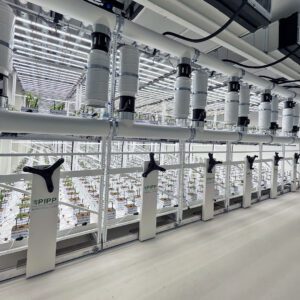
Pipp Horticulture at CanneraldUkraine’s medical cannabis law will take effect later in the summer of 2024; in the meantime, Parliament will draft more specific regulatory language. Imports will be a critical source of the country’s cannabis supply, echoing other European countries’ paths to a legal market.

As the global perspective on cannabis continues to evolve slowly but surely, Europe emerges as a promising frontier for businesses.

With a patchwork of regulatory environments and an increasing acceptance of medical and adult-use cannabis, Europe presents opportunities and challenges for industry stakeholders looking across the pond.

Statista Market Insights places the expected 2024 value of the European cannabis market at US$10.2 billion–with a growth rate on the order of 14.32% over the next five years. 

Tune into Cultivation Elevated Episode 22, while host Michael Williamson sits down with Sia Baneei of Grow Motion, a Swiss cannabis cultivation company, to delve into the intricate world of the European cannabis industry.

For cultivators and retailers who have experienced the dynamic growth of the cannabis industry in the U.S., the European market may be the next big venture. Let’s explore the landscape of the emerging cannabis marketplace in Europe, highlighting the potential for growth, regulatory considerations, and how businesses can position themselves for success in this new terrain.

European Cannabis Laws: An Overview

Europe’s cannabis market is in a state of flux, with countries at various stages of legalization and acceptance.  Nations such as Germany, the Netherlands, and Portugal have made significant strides in cannabis reform, setting the stage for a burgeoning industry. Let’s take a tour. 
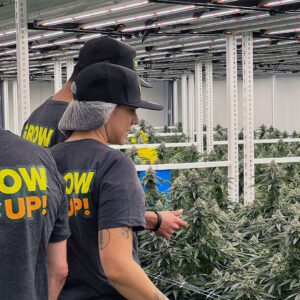
Pipp Horticulture at Trichome

Germany

Germany made global headlines in late February when the lower house of Parliament legalized adult-use cannabis in a limited capacity, the first legalization measure of its kind for a country of this size in Europe (Germany follows Malta and Luxembourg in legalizing cannabis on the continent). 

The vote clocked in at 407-226, and arrived only after several years of ping-pong between a hardline “no” stance on legalizing cannabis and a willingness to draft actual regulatory language. In 2024, the willingness to open the door to cannabis reform won out.

While cannabis will be legal for those 18 and older (and legal to grow), lawmakers declined to take up a taxed-and-regulated marketplace for now. The legislation does allow for cannabis “clubs,” which will provide a space for up to 500 members to buy cannabis grown at home by other adults. 

Health Minister Karl Lauterbach said the broader idea in Germany is to “fight the black market” and provide a measure of safety to cannabis use. “Whatever we do, we can’t carry on like this,” he told lawmakers, according to the Associated Press. “You can stick your head in the sand … but we won’t solve a single problem that way.”

Germany came into this year a leader in medical cannabis already, having legalized it in 2017. The country established a government-controlled system for cultivation, prescription, distribution, and imports, creating a significant market for medical cannabis products and associated equipment.

The Netherlands

Known historically for its liberal stance on cannabis, The Netherlands has tended to informally allow the sale of cannabis in coffee shops. In recent years, lawmakers have kicked the tires on plans to regulate the supply chain more formally. 

The state launched a pilot program to legalize the sale of adult-use cannabis  in December 2023, greenlighting coffee shops in the cities of Breda and Tilburg to sell cannabis grown by one of two licensed cultivators.

That marks the second European country to embark on a pilot program. The first country was… 

Switzerland

Switzerland arranged a trial program for adult-use legalization in 2023. The country’s Federal Office for Public Health initially greenlit six pilot projects (three of which are already selling cannabis legally to Swiss citizens). More of those projects are expected as the program picks up momentum.

A federal commission stated in 2023: “Cannabis must be controlled, legally accessible, but not be promoted.” That’s a fine line to walk for small businesses interested in growing an audience and developing a brand.

“The cannabis business in Europe is very, very difficult,” Grow Motion’s Sia Baneei said in a recent Cultivation Elevated podcast episode. Grow Motion is a licensed cultivator in Switzerland’s high-CBD cannabis market. “We live in Switzerland, and the rent for our facility is very, very expensive. That’s why we wanted to get the maximum of our facility and why we made the decision to work on three layers [in a vertical farming room design].”

That’s another challenge that businesses will face in Europe, perhaps more so than in areas in the U.S.: Real estate is at a premium, and industrial space is simply more limited than it is in the rural stretches of, say, the Ohio cannabis market. A mobile vertical racking system can go a long way toward maximizing grow space while maintaining safe and easy access to plants, solving critical needs in cramped quarters. Pipp Horticulture at Cannabor 
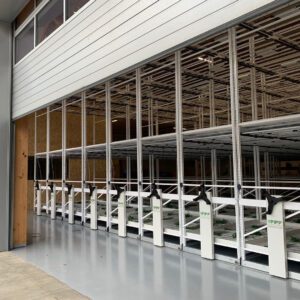
Portugal

Having decriminalized all drugs in 2001, Portugal has taken steps toward a regulated medical cannabis market and is seen as a potential hub for cultivation due to its favorable climate. Companies of all sizes have set up shop in Portugal, using the state as a formidable base of operations for corporate headquarters and cultivation sites. 

As of the end of 2023, the majority party in the federal government was developing a task force to closely look at cannabis legalization prospects. That party is not alone; support for broad legalization measures has increased across the government in recent years. 

Somai Pharmaceuticals founder and CEO Michael Sassano told Business of Cannabis, “Discussions like Portugal’s decision to move forward with studying to legalizing adult-use cannabis and other discussions around legalizing medical cannabis are being taken up by most EU countries more progressively than ever before. Much has to do with the potential U.S. rescheduling to Schedule III and the German descheduling of a narcotic. Global winds are changing fast, and Portugal is still very much at the top of the list as a potential new country moving towards legalizing cannabis”.

The Czech Republic

The Czech Republic announced its intention to legalize cannabis, but that plan does not include any real tax-and-regulate system that would allow sales. The country decriminalized possession for personal use in 2010, meaning that this current plan would effectively reiterate the status quo and apparently add provisions for cannabis use in social clubs. After a show of political support for a regulated market from some political leaders, this “compromise” plan leaves licensed corporations and suppliers mostly on the sidelines. That said, we anticipate more information to come in 2024. 

The lack of a formal market structure will be hotly debated this year. 

“The existence of a commercial and strictly regulated market with licensed growers and stores is a basic prerequisite for the successful reform of anti-cannabis laws, as is evident all over the world – from Colorado to California to Canada or Switzerland and the Netherlands,” CzecHemp manager Lukáš Hurt said in a translated press release. “Thanks to regulation, it is possible to significantly reduce the revenues of the illegal market and at the same time obtain funds for effective drug prevention and education.”

France

France began a medical cannabis experiment in 2021, offering free products to thousands of patients. The trial program was expected to sunset in the spring of 2024, but for now, the Minister of Health is open to a plan that will gradually transition that arrangement to a more formal (yet still “temporary”)  medical cannabis regulatory structure for the next five years. 

This plan is in flux, so we anticipate learning more soon, but France has shown a willingness to broaden its access and industry sophistication with this news. 

The UK

While not a member of the European Union, the UK has also made strides in step with its neighbors. Following its 2016 departure from the EU, the UK legalized an extremely tightly regulated medical cannabis program; the UK’s National Health Service has not developed this program much further than allowing limited prescriptions.

That said, the industry is livelier in the UK than it might seem; the country ranks among the largest exporters of medical cannabis products in the world. 

Across Europe, the recent shifts towards decriminalization, and even recreational legalization in some jurisdictions, signal a broader change in societal attitudes towards cannabis. 

This evolving regulatory landscape presents a fertile ground for innovation and investment but requires a nuanced understanding of each country’s legal framework.

Navigating Regulatory Complexities

The demand for medical cannabis in Europe is on the rise, driven by an increasing body of research supporting its therapeutic benefits and a growing awareness among the population. This uptick in demand signals a burgeoning market for cannabis-related products and business solutions.

Pipp Horticulture at CanneraldHowever, the path to expansion is not without its hurdles. International treaties and the U.S.’s own complicated relationship with cannabis will complicate any expansion plans for growers or retailers with an eye toward Europe.
The continent’s diverse regulatory landscape means that what works in one country may not apply in another. For businesses looking to enter the European cannabis market, understanding and navigating these regulatory complexities is paramount.

Compliance with local laws and standards for the cultivation, storage, and distribution of cannabis products is critical, underscoring the need for adaptable and compliant solutions. To succeed in Europe, suppliers must tailor their offerings to meet the specific needs and regulations of each market.

Get a FREE Grow Consultation

Dispensary Inventory Management: Working With Limited Storage

Dispensary Inventory Management: Working With Limited Storage

Back Room Storage for Dispensaries

How To Manage Inventory in a Dispensary With Limited Space

The Source Dispensary Storage

Balancing the supply and demand of cannabis is a complicated task. On one hand, in many newer U.S. markets, the product essentially sells itself. Flower tends to move fast, and the early days of a business are spent mainly on simply keeping up with customers’ needs. Even in more mature markets, like California or Colorado, demand remains high as prices have fallen through the floor. 

But then there’s the matter of supply: Oversupply can contribute to backed-up inventory in the retail environment. In other cases, limited supply of a particular SKU or genetic profile can push dispensaries into a tight corner. 

What’s a dispensary manager to do?

We covered some of the biggest dispensary inventory management mistakes (and solutions) that your team may face behind the counter. Basic organization of your inventory may sound like a no-brainer, but it’s not always so simple. Your team may encounter difficulty in tracking product availability and technical issues with sales reporting–and thus decreased customer satisfaction the longer that those problems linger. 

Let’s zoom into these problems.

Consider the First In, First Out (FIFO) solution.

Timely Inventory Movement

First In, First Out

The Source Dispensary StorageCreating a FIFO structure to your secured storage area means that the items are retrieved in the order they were stored. This ensures that the oldest items on your shelves are sold from inventory first. 

This approach is beneficial when considering overall dispensary inventory management–and easily overlooked, given the uncertain nature of supply and demand curves. 

Product freshness is crucial, so you don’t want your oldest products to get bumped by newer products, inadvertently leaving you with even older products for the next customer. 

Implementing FIFO ensures that older stock is sold before newer deliveries, reducing the chances of selling outdated or degraded products. Furthermore, FIFO aids in efficient stock rotation, minimizing waste and ensuring a consistent quality of the product offering to customers.

This is perhaps most important with flower, which can degrade in potency and flavor over time. Depending on your market regulations, flower may be kept in airtight jars with humidity control packs or it may be prepackaged in separate containers from the wholesaler. Either way, freshness is paramount, so a solid FIFO structure is critical to keep up with consumer demand. 

READ MORE: Dispensary Storage: What You NEED to Know

But the same idea goes for concentrates and edibles and other products. Keep your concentrates stable by storing them in a cooler environment while adhering to the FIFO concept. Edibles should be moving through your inventory management system swiftly, as you don’t want to run up against expiration dates before you can sell what you’ve got.  

Pro Tip: Set up automatic reordering thresholds within your inventory management system. When stock levels of a particular product fall below a predefined threshold, the system should automatically generate a purchase order and send it to the supplier. This threshold should be carefully calculated based on historical sales data, lead times, and current market trends to ensure products are reordered just in time before stockouts occur.

Just In Time

The Source Dispensary StorageContinuing with the helpful dispensary inventory management acronyms, let’s address Just In Time (JIT) inventory systems.
The JIT approach insists that your team orders stock as close as possible to when it’s actually needed. This reduces the amount of inventory that needs to be stored on-site, freeing up space and reducing the risk of overstocking or product expiration.

Unless your team specifically sought a property that was larger than needed at first (and thus designed for growth), at some point you will run up against a space problem. JIT inventory management may help solve that.

To achieve a JIT system, you’ve got to be able to rely on your suppliers. Again, this is no small task in markets wracked with a volatile supply curve. But establishing clear communication with growers and wholesalers in your market will ensure that you can acquire products quickly and move them through your storage racks with ease.

If you’re already working with that FIFO framework, your racks should be clearly labeled and organized. As new inventory comes in, just in the nick of time, your team should understand right away where it belongs in the stock room.

Related to the JIT concept, consider the strengths of a retail business that focuses on a curated selection of products that meet the preferences and demands of your customer base. Analyzing sales data and customer feedback can help identify high-turnover and high-margin products, allowing dispensaries to work efficiently even when space is limited. No need to invest in low-demand products on a JIT basis; both of these strategies assume that your team is engaged with your customer base and broader market trends.

Secured Storage Is Key

The Source Dispensary Storage

While FIFO addresses the organization and rotation of inventory and JIT acknowledges your literal space constraints, secured storage ensures the physical safety of your team and the compliance of the stored products

Begin with your storage racks and zoom out: Consider all the ways you can optimize your space. By taking a holistic approach to secured storage, dispensaries can safeguard their operations and, inevitably, build trust with customers.

Secured storage systems protect inventory from theft, contamination, or degradation–crucial in maintaining product integrity and compliance with regulatory standards. Incorporating technology solutions like advanced locking mechanisms, surveillance systems, and inventory tracking software (even beyond what is mandated by your regulators) can enhance your secured storage space, ensuring that FIFO and JIT are implemented efficiently.

Conducting regular audits (biweekly or even weekly) of the secured storage area will ensure that all products are accounted for and that the dispensary inventory management systems are functioning as intended. Use those audits as a chance for the staff to re-familiarize themselves with the range of products and brands offered at your store.

Disorganized inventory can lead to numerous operational challenges, impacting customer satisfaction and regulatory compliance. Implementing a systematic approach to inventory management while keeping an eye on the actual supply and demand trends you’re facing is the ultimate goal. 

Get a FREE Grow Consultation